

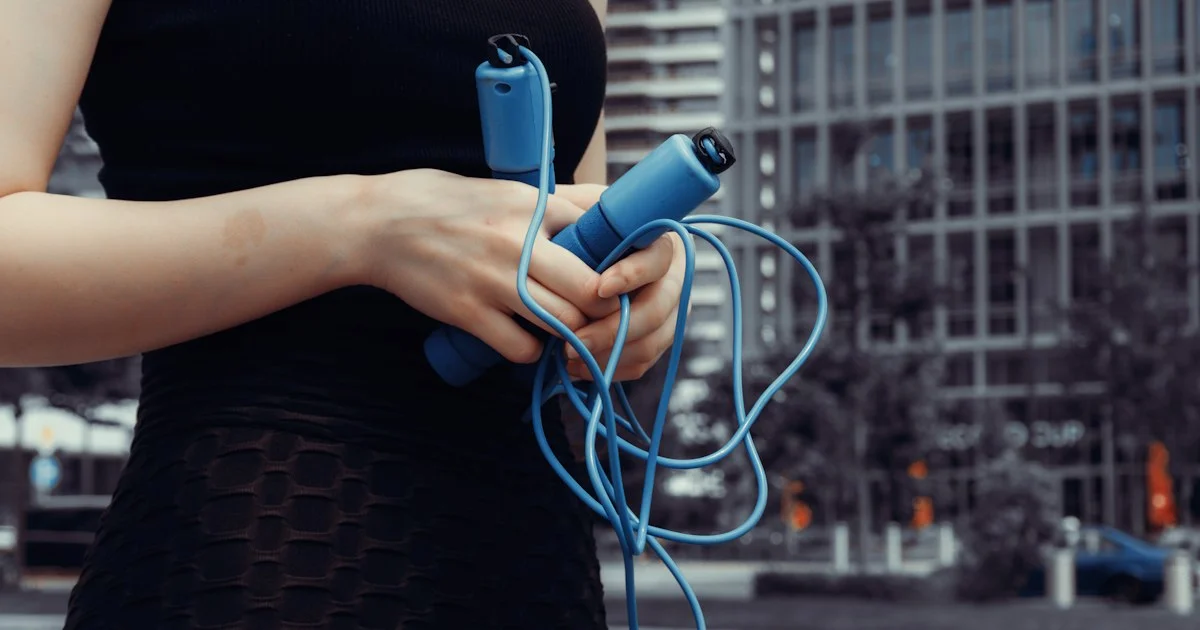
Pick up a smart jump rope in a store and the first thing you notice is the weight of the handles. The second thing, once you are home and the app is open, is how much of what you were sold happens on a phone rather than on the floor. That gap is the whole of what separates the best smart jump rope 2026 has to offer from an ordinary rope with a battery in it.
This article is general information about buying exercise equipment. It is not medical or fitness advice. Sources are named in the text so you can check them. If you have a heart, joint or balance condition, or you are returning to exercise after an injury, talk to a clinician before starting a jumping program rather than relying on a product page.
The claims the FTC says simply cannot be true
Before any feature list, read the marketing. The Federal Trade Commission publishes a short reference guide telling media outlets which weight-loss claims to treat as red flags, on the basis that experts say they “simply can’t be true.” Two of the seven land squarely on fitness gadgets.
The Commission lists a claim that a product “causes weight loss of two pounds or more a week for a month or more without dieting or exercise,” and a claim that a product “causes substantial weight loss by wearing a product on the body or rubbing it into the skin.” It also lists claims that a product “causes substantial weight loss for all users” and “causes permanent weight loss even after the consumer stops using product.”
That list is free, it is published, and it costs nothing to apply. A rope that counts jumps is a measuring tool. A listing promising a number of pounds by a date is describing something the FTC has already said cannot happen. Treat the second as a reason to close the tab, not a reason to compare specifications.
Choosing the best smart jump rope 2026 in five steps
Work through these in order. Each one removes options, and the first one removes the most.
- Read the claims first. Apply the FTC list above. Anything promising pounds per week without diet or exercise is out before you look at the hardware.
- Decide if you want counting or coaching. Counting is a sensor problem and works offline on most ropes. Coaching is software, and software is where fees live.
- Check what happens with the phone in another room. Ask whether the handles store sessions on their own and sync later, or whether an unpaired rope is just a rope.
- Check the cable and the handle separately. The cable is the part that wears out and the part most likely to be sold as a spare. The handle holds the battery and the sensor.
- Price the second year. Add any subscription, any replacement cable, and any charging cable that is not standard, then compare that total rather than the sticker.
What a counting rope actually gives you
A counting rope puts a sensor in one or both handles and turns rotations into a number. That is a genuinely useful thing, because counting jumps by yourself is miserable and people stop early rather than lose their place.
- A jump count, and usually a session time, without you tracking either
- Session history, so you can see last week rather than guess at it
- Interval timers, which is the feature most owners end up using daily
- On many models, a small display in the handle that works with no phone at all
- A replaceable cable, on the models that sell one
What it does not give you is intensity. A count tells you how many rotations happened. It says nothing about how hard the effort was, which is the number most buyers actually think they are getting.
Who it suits: the top smart jump rope for USA buyers
The top smart jump rope for USA buyers is usually the plain counting kind, and it suits anyone whose real problem is consistency rather than information. If you already jump and simply want a record of it, the sensor is the whole product and everything else is packaging.
It also suits small spaces well, because a counting rope adds nothing to the footprint of a normal rope. You are buying a rope that happens to keep score.

Cordless and weighted ropes, and which smart jump rope should I buy
The question of which smart jump rope should I buy usually comes down to a second decision most listings bury: do you want a cable at all. Cordless ropes replace the cable with weighted ends that swing on short stubs, and weighted ropes add mass to the cable or the handles.
Cordless suits low ceilings, shared walls and anyone who trips often enough to give up. It removes the trip, which is the single biggest reason beginners quit in the first week. The trade is that the rotation is inferred rather than measured by a cable passing under your feet, so the count is an estimate of a movement you are only partly doing.
Weighted ropes go the other way. They make the same number of rotations harder, which suits someone who has outgrown a plain rope and wants more from the same ten minutes. They are also harder on the wrists and shoulders, so they are a poor first rope.
Working out how to buy the best smart jump rope without paying twice
Working out how to buy the best smart jump rope for a second year is mostly a question of what stops working when you stop paying. Ask three things before checkout, and ask them about the specific model rather than the brand.
Does the rope count and store sessions with no account? Does the app keep your history if the subscription lapses, or does it hide it? And is the cable sold on its own? A rope whose cable is not sold separately is a rope with a fixed lifespan, however good the sensor is.
Checking your own effort without the app
The intensity number no rope measures is available free. The CDC describes one MET as “the energy or oxygen used while sitting quietly,” and sets the bands plainly: “Physical activity that burns 3 to 5.9 METs is moderate intensity. Physical activity that burns 6.0 METs or more is vigorous intensity.”
It also gives a test that needs no hardware at all. “A person doing moderate-intensity aerobic activity can talk, but not sing, during the activity. A person doing vigorous-intensity activity cannot say more than a few words without pausing for a breath.” Rope work sits at the hard end of that scale for most people, which is worth knowing before you buy a device to tell you so.
If you want this, pick that
| If you want | Pick |
|---|---|
| A record of sessions you already do | A plain counting rope with an in-handle display |
| To start jumping without tripping | A cordless rope, and accept an estimated count |
| More effort in the same ten minutes | A weighted cable, once you can already jump |
| Nothing to fail in year three | A model whose cable is sold as a spare part |
| Coaching and programs | Budget for the subscription as part of the price |
| To exercise with the phone away | A rope that stores sessions offline and syncs later |
Frequently Asked Questions
These are the questions buyers ask most often before ordering a counting rope.
Do smart ropes count accurately?
Cable ropes count rotations and are generally close. Cordless ropes infer a rotation that is not fully happening, so treat that count as an estimate. Either way, a count is not a measure of effort.
Is a subscription ever worth it?
It can be, if you will use structured programs and would otherwise pay for coaching. It is poor value if you only want a number, because the number is the part that works offline.
What size rope should I order?
Most adjustable ropes cover a wide range, so the practical check is whether the cable can be shortened without cutting. A rope you have to cut cannot be lent to anyone taller.
Can a jump rope replace running?
It can reach a similar intensity band, which the talk test above will tell you honestly. It is not a substitute for medical guidance if you have a condition that makes impact exercise risky.
Conclusion
The hardware question here is small: a sensor in a handle, and a cable that will wear out. The buying question is whether the software keeps working when you stop paying, and whether the claims on the listing survive a glance at the FTC’s own list. Answer those two and the rest of the decision is comfortable.


