

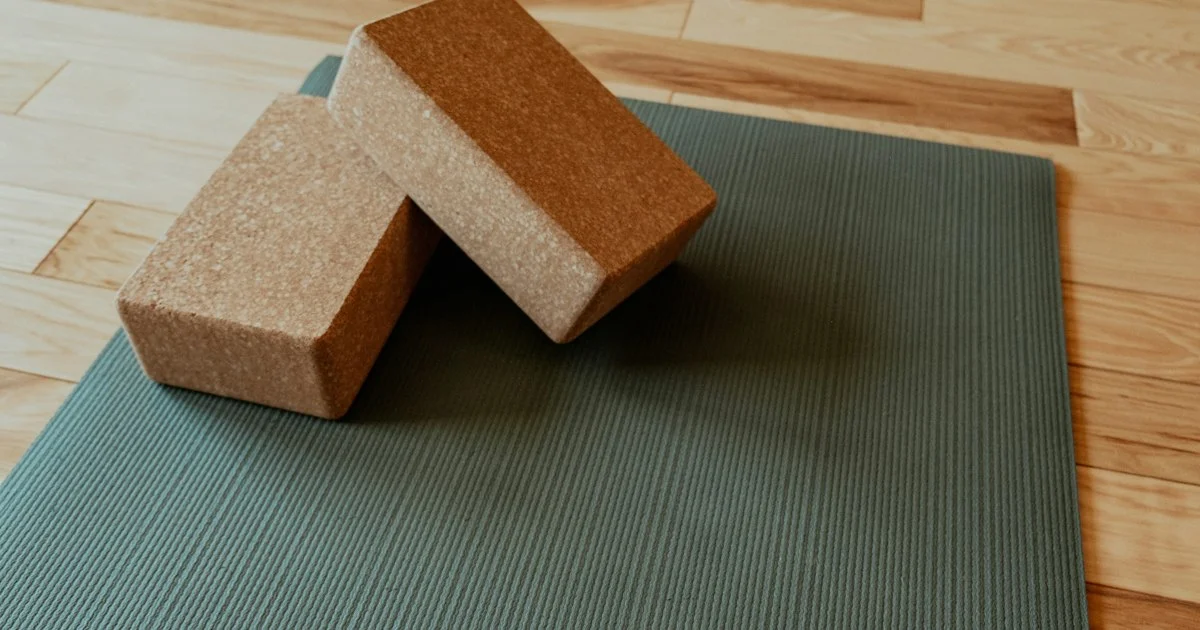
A yoga mat is a sheet of foam. Almost everything a smart one adds arrives as software, and software is sold on a different contract than foam is. That split explains most of what goes wrong with a top smart yoga mat 2026 purchase, and it is why two federal rules matter more here than any number printed on the box.
This is general information about buying exercise equipment, not medical or fitness advice. Anyone with a joint, back or balance condition, or returning to movement after an injury or surgery, should ask a clinician about floor work before taking a cue from an app.
Two rules that decide this purchase before the mat does
Sensor mats are almost always sold with an app, and the app is almost always a subscription. That makes the transaction a negative option sale, and negative option sales online are governed by the Restore Online Shoppers’ Confidence Act at 15 U.S.C. 8403. The statute makes it unlawful to charge for an internet transaction with a negative option feature unless the seller “provides text that clearly and conspicuously discloses all material terms of the transaction before obtaining the consumer’s billing information,” obtains “express informed consent” before charging the card, and “provides simple mechanisms for a consumer to stop recurring charges.”
Read that as a checkout test rather than as law. If the renewal price and the renewal date are not on the screen before the card field appears, the seller is already on the wrong side of the sentence that matters most.
The second rule covers what the mat says it does for the body. The Federal Trade Commission’s Health Products Compliance Guidance sets the support level for health claims at “competent and reliable scientific evidence,” meaning “tests, analyses, research, or studies that have been conducted and evaluated” by qualified people and “generally accepted in the profession to yield accurate and reliable results.” The guidance states plainly that “FTC advertising law applies to all products and claims,” and that the standard is “the same regardless of whether, under FDA law, the product is considered a food, a supplement, or a drug.” A mat that claims to correct alignment, prevent injury or count calories burned is making a health claim, and it owes that level of support the same as a pill would.
How to shortlist in five steps
- Open the checkout page first, not the product page. Find the renewal price, the renewal term and the cancellation route before anything else. If those three are hard to find, stop there.
- Write down what the mat does with the app switched off. If the answer is “it is a mat,” price it as a mat.
- Measure the floor, not the mat. Note the longest clear run in the room and the distance from that run to the nearest outlet.
- Separate the sensing claims from the coaching claims. Sensing is a measurement question; coaching is a content question, and they fail differently.
- Check what happens to the recorded sessions if the subscription lapses, and whether they can be exported.
Sorting out how to buy the best smart yoga mat before a trial ends
Free trials are where this category collects its money. The practical version of how to buy the best smart yoga mat is to treat the trial as the evaluation period it claims to be: put the renewal date in a calendar on the day the trial starts, use the mat on the surface it will actually live on, and decide before the date rather than after the charge. A trial that cannot be canceled from the same device that started it is failing the third clause of the statute above.
Where the top smart yoga mat 2026 claims actually come from
Almost every figure in this category is generated by the maker’s own testing, because no federal performance standard governs grip, cushioning or the accuracy of a pressure sensor in a fitness mat. That is not a scandal, but it does mean the numbers are not comparable between brands the way a certified rating would be. Two mats claiming the same alignment accuracy may have measured it in entirely different ways, and no rule required either of them to publish the method.
The useful consequence is that claims about the body deserve more scrutiny than claims about the object. A mat that says it is a quarter of an inch thick can be checked with a ruler. A mat that says it improves posture cannot, and that is precisely the claim the FTC guidance above is written about.
What a plain mat gives you, and who it suits
An unpowered mat has a short list of virtues that the sensor versions have to work to match. It rolls up small, it survives being left in a car, it costs a fraction of the subscription alone, and it will work the same way in ten years. Grip is the only property that really varies, and it varies with surface and sweat rather than with price.
- Anyone practicing from a routine they already know
- Anyone following a class, a teacher or a video that is free
- Renters and travelers who need something light and replaceable
- Households that want one mat to serve several people without profiles or logins

What a sensor mat gives you, and who it suits
A sensor mat’s real product is feedback in the absence of a teacher. Pressure sensors under the surface can tell where weight sits, whether a stance is even, and whether a hold lasted as long as it felt. For someone learning alone, that is genuinely useful information, and it is information a mirror does not give reliably.
It suits a beginner practicing without supervision, someone rebuilding a habit who responds to streaks and logs, and anyone whose main obstacle is not knowing whether a shape is right. It suits nobody who already has a teacher, and it suits nobody whose practice happens in places without a phone.
What the best smart yoga mat for USA buyers is paying for
The best smart yoga mat for USA buyers is usually paying for three things at once, and only one of them is the mat. There is the physical surface, which is a commodity. There is the sensor layer, which is genuinely hard to build and genuinely hard to verify. And there is the content library, which is the part that recurs monthly and the part most likely to change after purchase.
Separating those three at the point of sale is the single most useful thing a buyer can do, because the first is durable, the second is unverifiable from a listing, and the third can be canceled.
Answering which smart yoga mat should I buy for your own floor
The honest answer to which smart yoga mat should I buy depends more on the room than on the model. A sensor mat on carpet reads differently than the same mat on hardwood, and thick underlay can flatten the very pressure differences the sensors exist to detect. A mat that needs mains power narrows where it can be unrolled. A mat that charges over a cable adds a consumable to a product that previously had none.
Take the measurement before shopping: the clear floor run, the surface under it, and the distance to power. Those three numbers eliminate more options than any feature list will.
If you want this, pick that
| If this is true of you | Pick | The trade-off |
|---|---|---|
| You already follow a teacher or a class | A plain mat, chosen on grip | No log of what you did |
| You practice alone and cannot tell if a shape is right | A sensor mat with feedback | A recurring charge, and a device in the room |
| You move between homes, gyms and hotels | A light plain mat | Thinner cushioning underfoot |
| You want a habit record more than correction | A plain mat plus a free tracking app | Self-reported rather than measured |
| Several people share one mat | A plain mat | No individual profiles |
| Your floor is thick carpet | A plain mat, or test the sensor version first | Sensor readings may be muted |
Frequently Asked Questions
Three questions come up more than the rest when this category is on the table.
Do the sensors keep working if I stop paying?
Usually not in any useful way. On most designs the hardware reports to an app, and the app is what interprets the readings, so a lapsed subscription tends to leave a normal mat behind. Check the specific answer before buying, because it is the difference between a one-time purchase and an indefinite one.
Is a thicker mat always better for joints?
No. Thickness trades cushioning against stability, and standing balance work gets harder as the surface gets softer. People who mostly do floor work tend to prefer thicker; people who mostly do standing work tend to prefer thinner. Anyone with a knee or back condition should raise it with a clinician rather than solve it by buying more foam.
Can a mat really count calories?
Treat any calorie figure as an estimate built from assumptions about body size and effort, not a measurement. It is also exactly the kind of health claim the FTC guidance above expects to be supported by real evidence, which makes it a reasonable thing to ask a seller about directly.
Conclusion
The mat is the cheap, durable, easily judged half of this purchase, and the software is the expensive, recurring, hard-to-judge half. Price them separately, read the checkout before the spec sheet, and let the room decide the rest.


