

An order for a handmade gift passes through three separate sets of rules before it reaches a doorstep, and only one of them belongs to the platform. Anyone assembling a Best Handmade Gifts Online 2026 shortlist on Etsy is really choosing between listing types, because the word on the front of the listing is a defined term with a published policy behind it, and the policy is broader than the word sounds.
This is an independent editorial review. Etsy did not review or approve this article.
You can see Etsy’s current marketplace on its official site:
What handmade means in Etsy’s own policy
Etsy publishes a Handmade Policy, and it is the most useful page on the site for a gift buyer. It defines handmade items as “physical items made by a seller by hand or using personal or computerized tools,” which already covers more ground than most shoppers assume, because a laser cutter, a 3D printer and a CNC machine are all personal or computerized tools working from an original design.
The policy then splits the marketplace into three groups rather than one. Items can be made by a seller, designed by a seller, or handpicked by a seller. The middle group is the one that surprises people: “designed by you” covers “sellers’ original designs that are produced or printed by a third party or offered as a digital download.” A listing in that group is original work, and it was not necessarily shaped by the hands of the person selling it.
Etsy does require the fact to be disclosed. Its policy states that “sellers must disclose that an item is made by a production partner, and provide accurate information about where the item will ship from.” That disclosure is the single field worth reading before buying, because it converts a vague impression into a fact on the page.
The third group has a hard definition attached. Vintage items are “items that are 20+ years old, that the seller personally curated or collected.” Twenty years is a test, not a mood, and a listing described as vintage without that age behind it is in the wrong category.
How to shortlist the Best Handmade Gifts Online 2026 in five steps
Those four definitions turn into a reading order that takes about a minute per listing.
- Decide which of the three groups the gift needs to come from before searching. Made by a seller, designed by a seller and handpicked by a seller are different products with a shared search page.
- Open the listing and look for a production partner disclosure. Its presence is not a fault; its absence on a listing selling the romance of a workshop is the thing to notice.
- Check the stated ship-from location, which the same policy requires the seller to give accurately. It is the number that decides arrival date, not the processing time alone.
- Read the age claim on anything sold as vintage against the twenty year definition rather than against the photograph.
- Treat a made-to-order listing as a commissioned job. The maker is a person with a queue, and the queue is the part of the purchase a buyer cannot speed up.
What a made-by-the-seller listing gives you
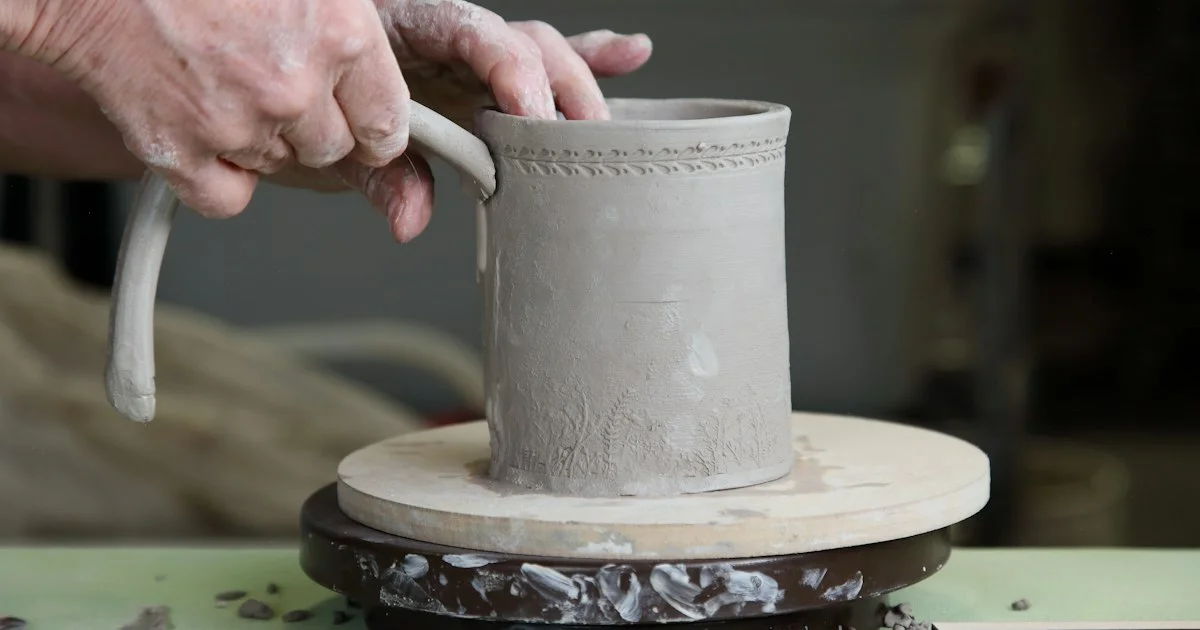
This is the category the marketplace is named for, and it is the only one where the person answering messages is also the person who shaped the object.
- Variation between pieces, which is a property rather than a defect on a thrown, turned or hand-finished item.
- A maker who can answer material questions directly, because they chose the materials.
- Small production runs, so a repeat order months later may not match the first one exactly.
- A queue that is a real constraint, since one person is the whole capacity of the shop.
The trade-off is timing. A category defined by individual work cannot absorb a December rush the way a printer can, and the honest planning assumption is weeks rather than days.
Who a made-by-the-seller listing suits
Buyers hunting for unique handmade gifts are describing this group precisely, and the variation they are paying for is the same variation that makes a matched set of six hard to promise. It suits a single significant gift with a long runway: a housewarming present chosen in October for December, or a wedding piece commissioned months ahead.
It suits somebody who wants to talk to the maker before ordering. A shop run by the person who makes the work can answer a question about wood movement, glaze food safety or metal allergy from experience rather than from a supplier sheet.

What a designed-by-the-seller listing gives you
Most of the volume in handmade gifts online search results sits in this second group, and it is not a lesser product. An original design produced or printed by a third party is still original work, and Etsy’s own policy says so directly.
What changes is everything downstream of the design. Production capacity belongs to a partner, so a December order is far less likely to be refused. Consistency improves, so a set of six matches. Personalization is usually handled as a field on the listing rather than as a conversation, which is faster and less flexible at the same time.
The reason to read the production partner disclosure is not suspicion. It is planning. A listing that says where the item is produced and where it ships from is telling you, before you pay, which of these two products you are buying.
Who a designed-by-the-seller listing suits
Shoppers looking for the best handmade gifts for special occasions with fixed dates attached should start here rather than in the first group. An anniversary, a graduation or a corporate order for twelve people needs repeatability and a dependable ship date more than it needs the marks of an individual hand.
It also suits a first order from an unfamiliar shop. A production run has already been through quality control more than once, which lowers the risk on a gift that has to arrive right the first time.
The child safety rule that applies to a handmade gift
A handmade gift bought for a child is a children’s product in the eyes of federal regulators, and the maker’s size does not change that. The Consumer Product Safety Commission runs a Small Batch Manufacturer registration for very small sellers, with two tests: gross revenue from the prior calendar year across all consumer products of “$1,436,864 or less,” and “no more than 7,500 units” of a covered product manufactured in the previous calendar year.
Registration relaxes one thing only. It allows some third-party testing to be replaced by first-party testing, testing at a laboratory that is not CPSC-accepted, or a written statement of assurance from a supplier. It relaxes nothing else.
The obligations that stay are the ones that matter to a buyer. Group A rules apply regardless of registration, covering lead in paint, durable infant and toddler products, pacifiers, small parts, lead in children’s metal jewelry, and baby bouncers, walkers and jumpers. The CPSC also states that “compliance with CPSC tracking label requirements, as well as other applicable labeling requirements, is also mandatory, regardless of Small Batch Manufacturer status,” and that registered small batch manufacturers “must still comply with all applicable CPSC product safety requirements and must still prove compliance with those requirements through the issuance of a CPC.” A Children’s Product Certificate is not optional for a small shop.
The practical version for a gift buyer: a hand-knitted toy, a painted wooden puzzle or a beaded bracelet intended for a young child sits inside that framework, and a seller who can describe their tracking label and certificate is describing compliance rather than marketing.
A buyer decision table
| If you want | Choose | What to read on the listing |
|---|---|---|
| One significant piece, no fixed deadline | Made by the seller | Processing time and the maker’s own description of materials |
| A matched set or a fixed arrival date | Designed by the seller | The production partner disclosure and the ship-from location |
| Something genuinely old | Handpicked by the seller | The age claim against the twenty year definition |
| A gift for a young child | Either, from a seller who documents it | Tracking label and Children’s Product Certificate |
| To know what you are actually buying | Any group | The production partner field, before price |
Frequently Asked Questions
Four questions come up more than any others once the policy definitions are in view.
Does handmade on Etsy mean one person made it by hand?
Not always, and the policy is open about it. Handmade covers items “made by a seller by hand or using personal or computerized tools,” and a separate group covers original designs “produced or printed by a third party.” Both are legitimate listings. The production partner disclosure is what tells the two apart on a given page.
What is a production partner, in Etsy’s terms?
It is a third party that produces a seller’s original design. Etsy requires sellers to “disclose that an item is made by a production partner, and provide accurate information about where the item will ship from.” The disclosure is a field on the listing rather than something a buyer has to ask for.
How old does an item have to be to be listed as vintage?
Twenty years. The policy defines vintage items as “items that are 20+ years old, that the seller personally curated or collected.” A piece styled to look older does not meet the definition, and belongs in one of the other two groups.
Are small handmade sellers exempt from children’s product safety rules?
No. CPSC’s Small Batch Manufacturer program can reduce some third-party testing for qualifying sellers, but tracking label requirements remain “mandatory, regardless of Small Batch Manufacturer status,” Group A rules always apply, and a Children’s Product Certificate is still required. Size changes the testing route, not the obligation.
You can see Etsy’s current marketplace on its official site:
Conclusion
The gift category on Etsy is not one category. It is three, with published definitions, and the production partner disclosure is the field that tells a buyer which one a listing belongs to before any money changes hands.
Pick the group that matches the occasion rather than the photograph, read the age claim on anything sold as vintage, and ask for the tracking label and certificate on anything headed for a young child.


