

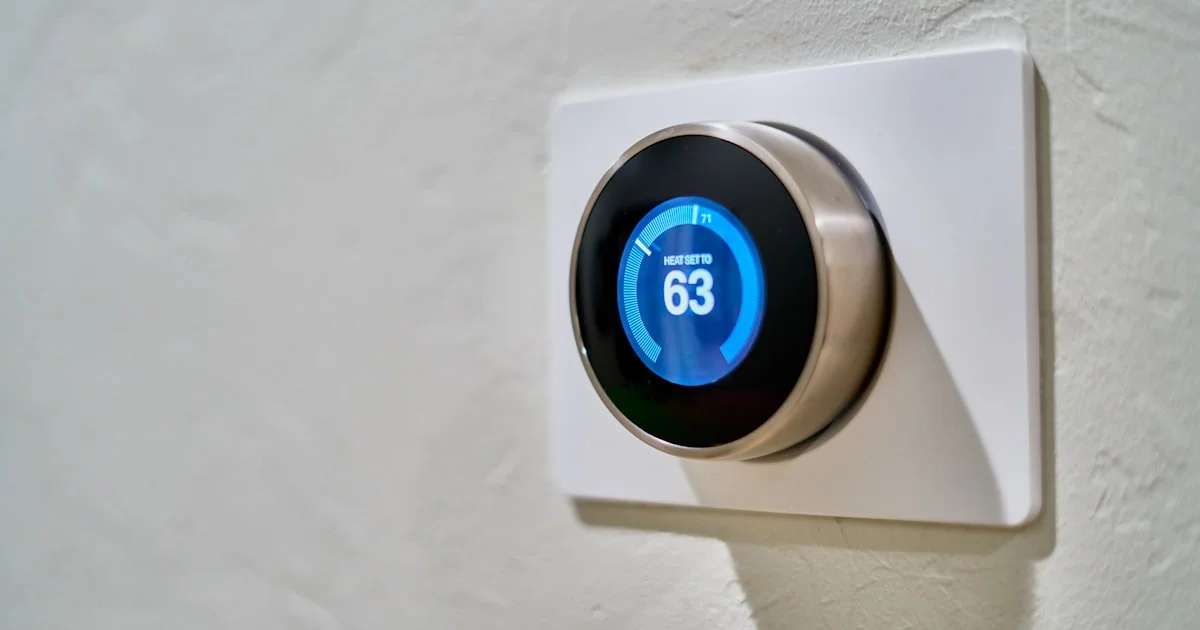
The best smart thermostat is the one that works with your heating system, fits how your household actually lives, and gives you controls you will keep using after the novelty wears off. Brand popularity matters far less than compatibility, wiring requirements, sensor placement, and whether the manufacturer will still support the device in five years.
Key Takeaways
- Check HVAC compatibility before anything else — a C-wire requirement is the most common reason an installation stalls.
- Remote sensors matter more than app design. A thermostat that only reads the hallway will heat the hallway.
- Savings depend on your habits and climate, not on the thermostat itself. A device cannot save energy you were not wasting.
- Confirm the unit keeps working as a normal thermostat if the internet or the manufacturer’s servers go down.
- Renters should look for models that install without altering wiring, or consider a smart plug approach for portable heating instead.
What makes the best smart thermostat worth installing
The short answer: compatibility with your system, a sensor setup that reflects where people actually sit, and scheduling you will genuinely use. Everything else is refinement.
Smart thermostats earn their place by removing friction. A conventional programmable thermostat can do most of the same things, but the programming interface is usually so awkward that people set it once and never adjust it again. Being able to change a schedule from your phone, in ten seconds, is what turns a theoretical saving into a real one.
Check HVAC compatibility first
Before comparing displays or apps, identify what you have. Conventional forced-air systems, heat pumps, multi-stage systems, radiant floor heating, boilers, and line-voltage baseboard heaters all have different requirements, and a thermostat built for one may not control another correctly.
The single most common obstacle is the C-wire, or common wire, which supplies continuous power to the thermostat. Older installations frequently lack one. Manufacturers offer workarounds — power extender kits, battery operation, adapters — but these vary in reliability by system, and some heat pump and multi-stage setups do not tolerate them well.
- Take a photo of your existing wiring before removing the old thermostat. Label each wire against its terminal.
- Run the manufacturer’s online compatibility checker — most are accurate and free.
- Heat pumps need auxiliary and emergency heat support. Not every thermostat handles this correctly.
- Multi-stage systems require a thermostat that can control each stage independently.
- Line-voltage baseboard heating needs a specific high-voltage thermostat. Standard smart models will not work and are unsafe to fit.
- When in doubt, get an HVAC professional to confirm before buying rather than after.

Features that matter in the best smart thermostat 2026 models
When shortlisting the best smart thermostat 2026 options, weight these features by how often you will actually encounter them rather than how prominently they appear on the box.
- Remote sensors. The most valuable feature by a wide margin. Thermostats sit in hallways, which are rarely where anyone spends time. Sensors in bedrooms and living rooms let the system heat the rooms that matter.
- Scheduling flexibility. Look for separate weekday and weekend schedules and easy temporary overrides.
- Geofencing. Adjusts temperature based on whether phones are home. Useful for irregular schedules, less so for households with someone always in.
- Local control fallback. Confirm the unit functions as an ordinary thermostat without internet.
- Learning behaviour. Some units build schedules by observing you. Convenient for some, frustrating for people who prefer explicit control — check whether it can be switched off.
- System monitoring. Alerts for filter changes or unusual run times catch problems early.
Sensor placement changes the result
A thermostat measures temperature at one point on one wall. If that wall catches afternoon sun, sits near a draught, or is close to a heat source, every decision the system makes is based on a misleading number. This is why remote sensors deliver more real comfort improvement than any algorithm.
Nest vs Ecobee thermostat: how to think about the comparison
The Nest vs Ecobee thermostat question dominates search results, but framing it as a two-horse race obscures what actually decides the outcome for a given home. Both families are mature and well supported. The differences that matter are structural rather than about which brand is better.
| Decision point | What to check |
|---|---|
| Sensor approach | How many remote sensors are supported, and whether they are included or sold separately |
| Scheduling philosophy | Whether the unit learns automatically or expects you to set explicit schedules |
| Ecosystem | Which voice assistant and smart home platform you already use |
| C-wire handling | Whether the model needs one, and what workaround is offered |
| Heat pump support | Whether auxiliary and emergency heat stages are handled properly |
| Offline behaviour | What functionality survives an internet outage |
| Utility programmes | Whether your energy provider offers a rebate for specific models |
That last row is worth checking before you buy anything. Many utilities offer rebates that substantially change the effective price of particular models, and the eligible list is often narrower than you would expect.
A realistic smart thermostat energy savings review
An honest smart thermostat energy savings review has to start by acknowledging that savings figures quoted in marketing are averages drawn from studies with specific assumptions about climate, home construction, and prior behaviour. Your result may be considerably better or worse.
The savings come from a few mechanisms, none of them magic. Setting back the temperature while the house is empty or everyone is asleep is the largest contributor. Avoiding the pattern of heating an empty house because nobody adjusted the dial is the second. Better matching of output to actual occupied rooms is the third.
This means the households that save most are those that were previously running a constant temperature around the clock. If you already turn the heating down when you leave and at night, a smart thermostat will improve convenience considerably and your bill only modestly. That is not an argument against buying one — it is an argument for buying it for the right reason.
Climate matters too. Homes in mild climates have less heating and cooling to optimise in the first place, so the absolute saving is smaller regardless of how well the thermostat performs.
Frequently Asked Questions
These questions come up most often when people plan a smart thermostat installation.
Can I install a smart thermostat myself?
Many people can, if the wiring is straightforward and a C-wire is present. Turn off power at the breaker first, photograph the existing wiring, and follow the manufacturer’s guide. Heat pumps, multi-stage systems, and anything involving line voltage are better handled by an HVAC professional.
What happens if my internet goes down?
Well-designed models continue running their stored schedule and respond normally to the physical controls. Remote access, geofencing, and voice control stop until connectivity returns. Confirm this behaviour before buying, as it varies between manufacturers.
Are smart thermostats suitable for renters?
It depends on your agreement and the wiring. Some models install without alterations and the original thermostat can be refitted when you leave — keep it safely. Where changes are not permitted, smart plugs controlling portable heaters offer a limited alternative. Ask your landlord first.
Do I need remote sensors, or is one thermostat enough?
If your home has consistent temperatures throughout and the thermostat sits in an occupied room, one unit is fine. If some rooms run noticeably colder or warmer, or the thermostat is in a hallway, remote sensors will make more difference to your comfort than any other upgrade.
Conclusion
Start with compatibility, prioritise remote sensors over app features, and check your utility’s rebate list before choosing a model. Get those three right and almost any well-supported smart thermostat will serve you well for years.


