

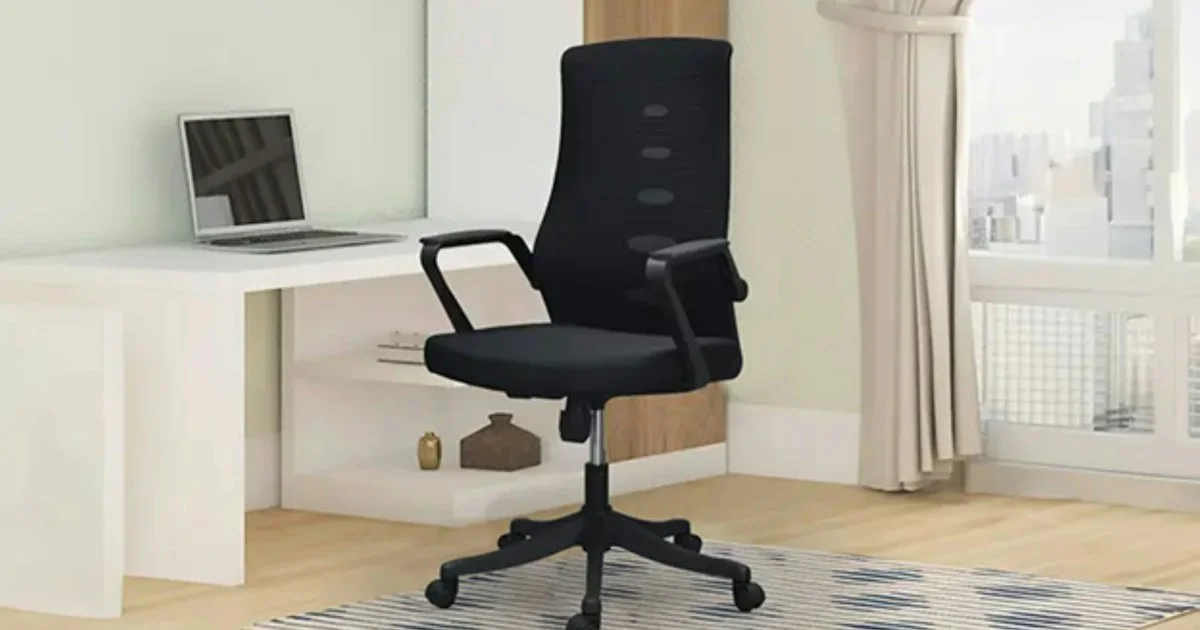
A desk chair is the one thing in a home office you touch for eight hours a day without ever looking at it. That makes it easy to buy badly, and expensive to buy twice. This guide covers which ergonomic office chair to buy 2026 shoppers should actually shortlist, based on the seating criteria published by OSHA and the durability tests written into the ANSI/BIFMA furniture standard.
This is general information about buying furniture, not medical advice. Back pain that persists, wakes you at night, or comes with numbness or tingling in the legs is worth taking to a doctor or physical therapist rather than treating as a shopping problem.
How to work out which ergonomic office chair to buy in 2026
Start from your body and your desk, not from a product page. Almost every chair described as ergonomic offers the same headline features, so the useful questions are about range of adjustment and whether the chair fits the person sitting in it. Work through these five steps in order:
- Measure your seated height first. OSHA’s test is simple: the chair is at the right height when the entire sole of your foot rests on the floor and the back of your knee sits slightly higher than the seat. Check the chair’s stated seat height range against that before anything else.
- Check seat depth against your thigh. The seat should support most of the thigh without pressing into the back of the knee. Shorter legs need a shallower pan or a seat-slider; this is the single most common fit failure.
- Confirm the lumbar support moves. A fixed bump in the backrest only helps people whose lower back happens to sit at that height. Height-adjustable lumbar support is the feature that makes a chair fit more than one body.
- Look for at least 15 degrees of recline. OSHA specifies a backrest that reclines at least 15 degrees from vertical, because staying locked upright all day is its own problem.
- Verify the weight rating and the base. A five-legged base is the baseline for stability; fewer legs tip. Then read the weight rating, which is where the standards matter most.
What the durability standard actually tests
Any best ergonomic office chair guide that skips the standards is leaving out the part you cannot see in a photograph. ANSI/BIFMA X5.1 is the general-purpose office seating standard in the United States, and it is built around a ten-year single-shift working life for an occupant of about 125 kg — roughly 275 pounds, the 95th percentile adult male. To pass, a chair endures 100,000 seat impacts, 120,000 backrest cycles, 120,000 swivel rotations and 300,000 cycles of the tilt mechanism, plus a drop test using a 136 kg bag falling 152 mm onto the seat.
Two practical things follow from that. First, “BIFMA tested” is a meaningful claim and worth looking for on a spec sheet. Second, if you weigh more than about 275 pounds, X5.1 is not the standard written for you — BIFMA publishes a separate standard, X5.11, covering occupants from roughly 253 up to 400 pounds. Buying to the wrong standard is how a chair develops a wobble in year two.
What a mesh task chair gives you
Mesh backs won the last decade for a reason. A tensioned mesh panel flexes to the shape of your back instead of asking you to press into foam, it does not trap heat, and it keeps the chair light enough to move around a room. Mesh also tends to come with the adjustment hardware that matters — sliding lumbar, depth-adjustable seats, arms that move in more than one direction.
The trade-offs are real. Cheap mesh sags, and once it sags the lumbar shape is gone for good. The front edge of a mesh seat can also dig into the thigh on chairs where the frame sits too close to the surface.
Who a mesh task chair suits
The top ergonomic office chair for USA buyers working a normal desk day in a warm room is usually a mesh-back task chair, and it is the default recommendation for anyone who runs hot, works in a room without air conditioning, or shares the chair with someone of a different height. It is also the easier chair to get right remotely, because adjustment range does more of the fitting than cushion shape does.
It suits you if most of these are true:
- You sit for four hours or more at a stretch
- Your room gets warm, or you notice your back sweating against a chair
- More than one person uses the same desk
- You want the widest adjustment range for the money
- You care more about support than about how the chair looks in a video call

What a cushioned high-back chair gives you
A padded high-back chair solves a different problem: it supports the upper back and head, not just the lumbar curve. If you recline to read or take calls, a headrest stops your neck doing the work. Foam also spreads pressure more evenly than mesh on a hard frame, which matters for longer sits and for lighter people who do not weigh enough to tension a mesh seat properly.
The costs are heat, bulk and a shorter honest lifespan. Foam compresses permanently, and a seat that has flattened cannot be re-tensioned the way mesh sometimes can be. High-backs are also heavier to move and harder to tuck under a desk.
Who a cushioned high-back chair suits
This is the chair for long reclined work, cool rooms, and anyone who finishes the day with neck rather than lower-back complaints. It also suits people who want a chair that reads as furniture rather than as office equipment, which matters more than buyers admit when the desk is in a living room.
Match the chair to the problem you are solving
| If this is your situation | Shortlist this |
|---|---|
| Warm room, long focused sits, shared desk | Mesh task chair with sliding lumbar and a depth-adjustable seat |
| Neck and shoulder ache, lots of calls and reading | Cushioned high-back with an adjustable headrest |
| Under about 5’4″ and the seat always feels too deep | Any chair with a seat slider, or a petite-sized frame |
| Over about 275 pounds | A chair tested to BIFMA X5.11 rather than X5.1 |
| Desk cannot be lowered and feet dangle | Correct chair height first, then add a footrest |
| Carpet, and the chair will not roll | Carpet-rated casters; the wheel type is not a detail |
The adjustments worth paying for, and the ones that are decoration
If you want the short version of how to buy the best ergonomic office chair for a given budget, spend on the mechanisms that change how your body sits and ignore the rest. Seat height, seat depth, lumbar height and backrest recline all change your posture. Arms are worth having — OSHA asks for adjustable, softly padded armrests with rounded edges that support the forearm while keeping the upper arm close to the body — but four-way arms are a comfort upgrade, not a fix for a badly fitting seat.
What you can usually skip: lumbar “massage” panels, aggressive gaming-style bolsters that narrow the usable seat, and headrests on a chair you will never recline in. None of them appear in the OSHA criteria, and each adds cost.
Frequently Asked Questions
Three questions come up more than any others when people are choosing between chairs.
Does an expensive chair actually fix back pain?
A well-fitted chair removes one cause of discomfort — it does not treat a back problem. OSHA’s own guidance is blunt about the bigger factor: change position frequently rather than holding any single posture, however neutral. A good chair makes it easier to sit well and easier to move. Persistent pain still belongs with a clinician.
Is mesh or foam better for eight-hour days?
Neither wins outright. Mesh is better in warm rooms and holds its shape longer if the tensioning is decent; foam is more comfortable in cool rooms and for people who do not weigh enough to load a mesh seat. Judge the specific chair’s adjustment range before judging the material.
How long should an office chair last?
The BIFMA X5.1 tests are written around a ten-year single-shift working life, so a chair built to that standard and used at home should comfortably outlast a decade of normal use. Warranty length is a reasonable proxy when a spec sheet is vague — manufacturers rarely warranty a frame for longer than they expect it to survive.
Conclusion
Buy for fit and adjustment range first, material second, and looks last. Check the seat height and depth against your own body, confirm the lumbar support moves and the backrest reclines, and make sure the chair was tested to the standard that matches your weight — that sequence will get you a chair you stop noticing, which is the whole point.


