

Two red light panels can sit on the same shelf, carry the same promises, and deliver doses that differ by a factor of a thousand. That is not a figure of speech. When a researcher gathered 27 published studies on LED light for skin conditions in 2025, the doses ran across three orders of magnitude, and not one study checked the dose it had actually delivered. So the honest way to settle which red light therapy device should I buy is to stop comparing marketing numbers and start checking what the maker is required to tell you, and what it is quietly allowed to leave out.
This guide covers comfort and product selection only. Red and near-infrared light devices are not a treatment plan. If you have a skin, eye or pain problem that is persistent, spreading or getting worse, see a doctor rather than shopping for a device, and ask your prescriber before adding light to any skin medication you already use.
The answer to which red light therapy device should I buy starts with the claim on the box
Before any specification matters, there is a regulatory fact that reorders the whole shortlist: the lane a light device sits in is decided by what it claims to do, not by how bright it is.
The Food and Drug Administration sorts these products into separate product codes. A device sold for pain sits under code NHN, described as a “powered light based laser non-thermal instrument with non-heating effect for adjunctive use in pain therapy”, under regulation 21 CFR 890.5500, and it requires a 510(k) submission. Over-the-counter wrinkle devices sit under code OHS and over-the-counter acne devices under OLP, both under 21 CFR 878.4810, and both require a 510(k) too.
Then there is code ILY, “lamp, infrared, therapeutic heating”, under that same regulation 890.5500. The FDA record for ILY lists its submission type as “510(K) Exempt”. A great many household infrared and red light units sit in that lane, which means the agency may never have reviewed a submission for the thing in your cart at all.
That matters because of what a 510(k) is. The FDA defines it as “a premarket submission made to FDA to demonstrate that the device to be marketed is as safe and effective, that is, substantially equivalent, to a legally marketed device”, and says a device “may not be marketed in the U.S. until the submitter receives a letter finding the device substantially equivalent”. Cleared means similar enough to something already sold. It does not mean proven to work.
Two phrases on a product page therefore carry almost opposite weight. “FDA cleared for acne” points at a real submission under OLP. A bare “FDA registered” badge can sit perfectly legally on a product nobody reviewed. The Federal Trade Commission, which polices advertising separately from the FDA, puts it plainly in its Health Products Compliance Guidance: advertisers “should be careful not to mischaracterize the extent to which a product or claim has been reviewed, authorized, or approved by the FDA.”
You can check current options here:
Check on Amazon See on Walmart
How to shortlist a red light device in five steps
Work through these in order. The first step inherits the rule above, and it eliminates more products than the other four combined.
- Read the claim, then look up the lane. A pain claim, an acne claim or a wrinkle claim implies a 510(k). A vague wellness claim implies nothing at all. Ask the seller which product code and clearance the device holds, and treat an unanswered question as an answer.
- Ask for the dose numbers in writing: the wavelengths used, the irradiance at the surface being treated, the total energy per session, and the distance the figures assume.
- Ask how that distance is held. A number measured at two inches means nothing if you use the device across a room.
- Ask what eye protection ships with it, and what the instructions say about looking at the emitters.
- Ask which published standards the maker declares conformity to, and get the answer before you pay rather than after.
Step two is where honest sellers separate themselves. The FDA’s draft guidance on photobiomodulation devices tells manufacturers it expects them to identify the wavelengths delivered, the radiant power and irradiance at the tissue, the total energy per spot, the spot size, and “the distance of the light source from the site during treatment, and the means by which this distance will be maintained during treatment.” That document is a draft and not binding. It is still the clearest published list of what a seller could tell you.
What a full-body panel gives you, and why it leads most best red light therapy device 2026 shortlists
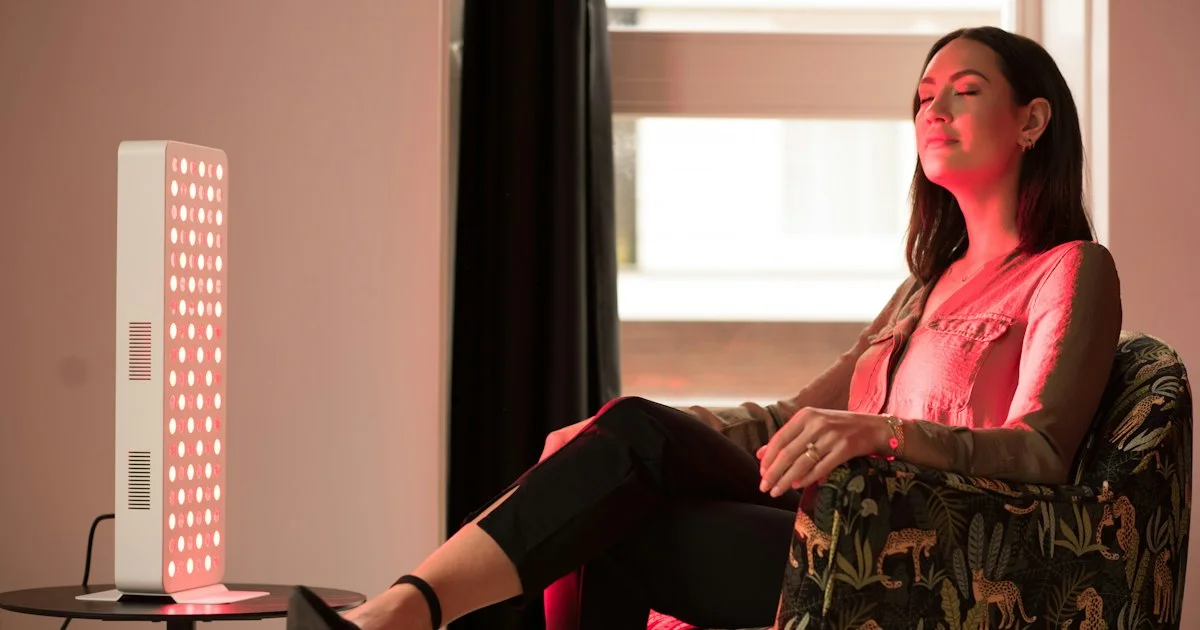
A large panel is the form that dominates the best red light therapy device 2026 roundups, and the reason is geometry rather than power. A panel treats a wide area at a fixed standoff, so it is the only household format where the distance in step three is easy to keep constant. Stand in the same spot each time and the dose is at least repeatable, even when the absolute figure is unknown.
Panels are also the format where the eye question is sharpest, because the emitters are at face height and the session is long. The FDA’s draft guidance states that these devices “pose a risk for ocular tissue damage as they may deliver energy and irradiance values greater than the maximum permissible exposure for the patient’s or user’s eyes”, and recommends that where the risk exists, “safety measures, such as the use of safety eyewear and/or skin contact sensors, should be included in the instructions for use”.
Published standards exist here, and a seller can be asked about them. The FDA recognizes IEC 60601-2-57, covering non-laser light source equipment for therapeutic, diagnostic and cosmetic use. It also recognizes a standard devoted entirely to sorting lamps into hazard tiers: “ANSI IES RP-27.3-17 – Recommended Practice for Photobiological Safety for Lamps – Risk Group Classification”. A maker that can name its risk group has done the work. A maker that goes quiet has told you something too.
Who a panel suits
- Anyone treating large areas such as the back, shoulders or legs.
- Anyone who wants a repeatable routine, because a stand fixes the distance a handheld device cannot.
- Anyone shopping on documentation, since panels are where irradiance and distance figures are most often published at all.
- Households with the floor space and a free outlet in the room where the routine will happen.

What a mask or wand gives you, and where a top red light therapy device for USA buyers fits
A face mask or a handheld wand is the other common shape, and for a shopper looking for a top red light therapy device for USA buyers working to a smaller budget it is usually the cheaper entry point. The trade is real. A mask holds the emitters against the skin, which removes the distance problem by making the distance zero, and that is a genuine advantage. A wand reintroduces the problem completely, because the dose now depends on a human hand and a timer.
Masks are also the format where the published evidence is least reassuring. A 2026 study in Photochemical and Photobiological Sciences measured four commercial cosmetic LED masks and reported that the “documentation lacked data on emitted energy across wavelength ranges, its absorption by the skin, and potential health consequences of improper use”, and that “in some cases, the total irradiances were higher than that from sunlight”. Four masks is a small sample and should be read as such.
One more wrinkle sits in the regulation itself. The codified text of 21 CFR 890.5500 describes a lamp emitting “energy at infrared frequencies … to provide topical heating” – yet the non-thermal pain code NHN is assigned to that same regulation. The classification structure is older than the products in it. Do not let anyone translate a regulation number into a performance claim.
Who a mask or wand suits
- Anyone treating the face only, where a contact mask removes the distance variable outright.
- Anyone testing the idea cheaply before committing to a panel and the space it needs.
- Anyone who wants a short, fixed session rather than a routine they have to time themselves.
- Readers already using prescription skin treatments should raise it with the prescriber first rather than stacking a device on top.
Learning how to choose a red light therapy device without an irradiance figure
The practical problem is that how to choose a red light therapy device is a question most sellers have not given you the data to answer. When the dose is missing, buy on the things that are checkable instead: the claim and its lane, the fixity of the distance, the eye protection in the box, and the standards the maker will name.
Decide by what you want, rather than by the advertised figure:
| If you want | Pick | The trade you are making |
|---|---|---|
| A repeatable dose you can hold constant | A panel on a fixed stand | Floor space, and a longer session |
| Facial coverage with no distance to manage | A contact mask | One body area only |
| Targeted use on a small spot | A handheld wand | The least repeatable dose of the three |
| A device with a reviewed submission behind it | One making a specific acne, wrinkle or pain claim | A narrower claim, and usually a higher price |
| The lowest outlay to try the idea | An entry mask | Documentation is thinnest in this tier |
The FDA’s General Wellness guidance, reissued on January 6, 2026, explains why the quiet end of this market stays quiet. The agency says it “does not intend to examine low risk general wellness products” for compliance with device requirements. But its own test for low risk asks whether the product “involve[s] an intervention or technology that may pose a risk to the safety of users and other persons if specific regulatory controls are not applied, such as risks from lasers or radiation exposure”. A bright emitter array is not automatically waved through, and a seller leaning on the wellness framing is making a claim about its own product that you are entitled to test.
Frequently Asked Questions
The questions below come up constantly and have answers that do not depend on any one product.
Does FDA cleared mean a red light device is proven to work?
No. Clearance through a 510(k) means the FDA found the device “substantially equivalent” to something already legally sold. It is a comparison to a predicate, not a finding of effectiveness. A device can be cleared and still have thin evidence behind the specific benefit being advertised to you.
Why do two devices with the same wavelength give different results?
Because wavelength is only one of several variables. Irradiance at the skin, session length, total energy and distance all change the delivered dose. The 2025 review of 27 LED studies found doses spread across three orders of magnitude, with no study validating the dose it delivered. The field itself has not standardized this.
Do I need eye protection with a red light panel?
Treat it as yes unless the maker shows you otherwise in writing. The FDA’s draft guidance on these devices says they can exceed the maximum permissible exposure for the eyes and recommends safety eyewear be specified in the instructions where that risk exists. Follow the instructions that came with your device, and if it shipped without any eye guidance, that absence is information.
Is a more expensive device automatically a stronger one?
Price tracks build quality, panel size and warranty far more reliably than it tracks delivered dose. Without a published irradiance figure and the distance it was measured at, there is no way to turn a price into a dose.
Conclusion
This is a category where the specification that decides the outcome is the one least often printed. Ask for wavelength, irradiance, total energy and the distance the figures assume, and ask which standards the maker declares. If those answers do not arrive, buy on the checkable things instead: the claim and its lane, a form factor that fixes the distance, and eye protection in the box.


