

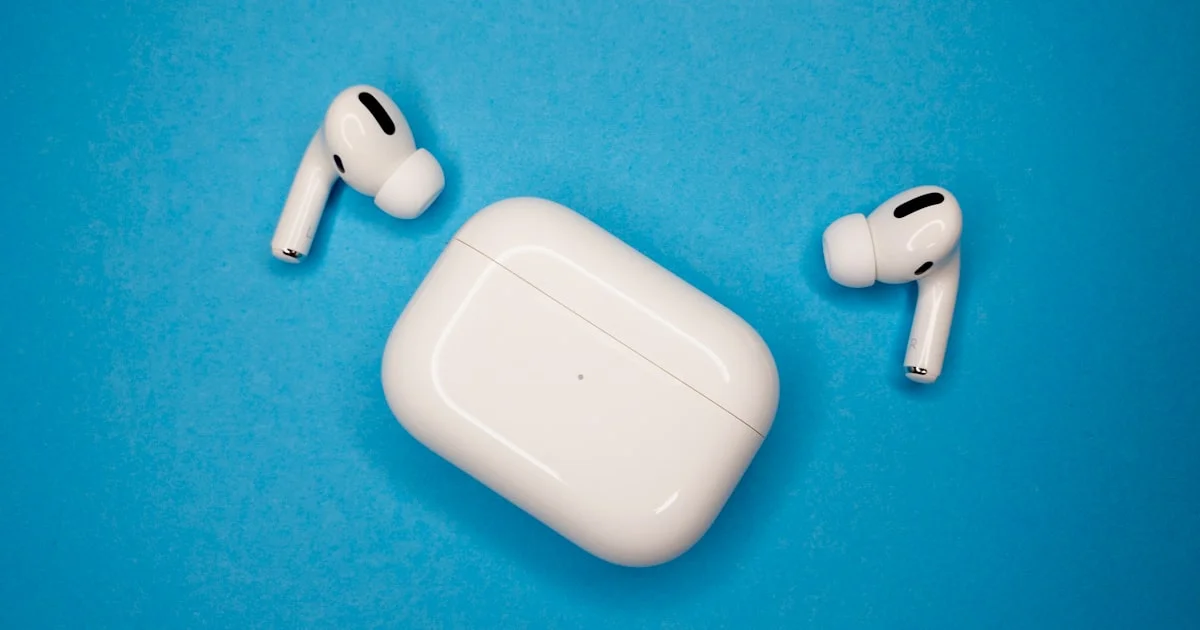
Shopping for the best wireless earbuds with long battery life usually starts the same way: you charge a pair overnight, use them for a few days, and then watch the battery indicator crash faster than the box promised. Runtime claims on packaging are measured under ideal lab conditions, not during a commute with noise cancellation on and the volume turned up. This guide breaks down which specs actually predict all-day battery performance, and which ones are just marketing filler.
We’ll walk through how to read manufacturer battery claims, compare the trade-offs between today’s longest-lasting models, and flag the habits that quietly drain a charge faster than expected. By the end, you’ll know exactly what to check before buying instead of trusting a number printed on a box.
Key Takeaways
- Total battery life (earbuds plus charging case) matters more than the single-charge number printed on the box.
- Active noise cancellation (ANC) can cut single-charge runtime by 20-30%, so check both the ANC-on and ANC-off ratings.
- Fast-charging support (10 minutes for 1-2 hours of playback) is often more useful day-to-day than a slightly higher max runtime.
- Battery health degrades over 18-24 months of daily use, so buy from brands that sell replacement units or offer battery-specific warranties.
- Case design, ear tip fit, and codec choice all affect real-world battery drain just as much as the chipset inside.
Best Wireless Earbuds With Long Battery Life: The Short Answer
The short answer: the best wireless earbuds with long battery life combine at least 8 hours of single-charge playback with a case that adds 20+ additional hours, plus fast-charging support so a quick 10-minute top-up gets you through an afternoon. Total battery life is the number that matters for most buyers, since almost nobody uses earbuds for eight hours in one uninterrupted sitting. What you actually experience day to day is a pattern of short listening sessions punctuated by the case recharging the buds in your pocket or bag, so the case’s own battery capacity deserves just as much attention as the earbuds themselves.
Pay close attention to how manufacturers phrase their claims. “Up to 30 hours” almost always refers to the combined earbuds-plus-case total with ANC switched off and volume at a moderate level. Turn on noise cancellation, push the volume higher, or stream over Bluetooth in a crowded area with lots of interference, and that number can drop meaningfully. Treat published specs as a ceiling, not a guarantee.
How We Judge Long Battery Earbuds
A proper long battery earbuds review has to separate marketing numbers from real usage, because the gap between the two is often bigger than shoppers expect. We look at four factors: the single-charge runtime with ANC on, the single-charge runtime with ANC off, total case-assisted battery life, and fast-charge recovery time. Brands rarely lead with the ANC-on number because it’s always the least flattering, but it’s the one that matters if you commute, work in an open office, or fly regularly.
We also weigh how battery capacity is distributed between the earbuds and the case. Two models can both claim “24 hours total” while behaving very differently in daily use — one might offer 6 hours per charge with a case good for three refills, while another offers 8 hours per charge with a case good for only two. The second option means fewer charging cycles and less case-babysitting throughout the week, even though the headline number is identical.
Comparing the Best True Wireless Earbuds
Here’s a qualitative look at how different earbud styles trade off battery life against other priorities. This best true wireless earbuds comparison focuses on trade-offs rather than exact runtime figures, since firmware updates and battery aging shift real-world numbers over time.
| Style | Battery focus | Best for | Trade-off |
|---|---|---|---|
| Compact stem-style buds | Moderate single-charge, strong case reserve | Everyday commuting and calls | Smaller drivers can mean thinner bass |
| ANC-focused buds | Shorter runtime with ANC on | Flights, open offices, noisy commutes | Battery drops fastest of any category when ANC is active |
| Sport/fitness buds | Long single-charge, smaller case | Workouts and outdoor activity | Case often adds fewer total recharges |
| Budget all-day buds | Very long total battery life | Buyers who prioritize runtime over sound tuning | Fewer premium features like wireless charging or multipoint |

What “Earbuds 30 Hour Battery” Ranking Really Means
When you see an earbuds 30 hour battery ranked list, it’s almost always ranking the combined earbuds-plus-case total, not a single uninterrupted charge. Understanding how that number breaks down helps you compare models fairly instead of assuming every “30 hour” earbud behaves the same way. Here’s how to read the claim step by step:
- Check the single-charge number first — this is how long you can listen before needing the case at all.
- Subtract that from the total to estimate how many full case-assisted recharges you’re actually getting.
- Look for whether the 30-hour figure assumes ANC on or off, usually noted in a footnote or spec sheet.
- Confirm the fast-charge rate, since a model with a smaller total but faster top-up can be more convenient day to day.
- Factor in battery aging — most lithium-ion earbud batteries lose 15-20% of capacity after roughly a year of daily charging cycles.
Features That Matter Beyond Battery Life
Runtime is important, but it’s not the only factor that determines whether a pair of earbuds earns a permanent spot in your ears. A few other features shape how much you’ll actually enjoy using them every day.
Comfort and Fit
Battery life is meaningless if the earbuds are uncomfortable after 40 minutes. Multiple ear tip sizes, a lightweight shell, and a stable in-ear seal all matter more for daily satisfaction than an extra two hours of runtime. A poor seal also hurts bass response and can trick you into raising the volume, which drains the battery faster.
Sound Quality and ANC
Look for adjustable ANC strength or a transparency mode, since running noise cancellation at full strength constantly is one of the fastest ways to burn through a charge. Some earbuds let you dial ANC down in quieter environments, which extends battery life without giving up the feature entirely.
Charging Case Behavior
A case with wireless charging support, a USB-C port, and a visible battery indicator (either an LED or an app readout) removes the guesswork of wondering how much reserve charge is left. Cases that support fast wired charging but not wireless are still perfectly usable — just don’t assume every case behaves the same way.
Common Mistakes That Drain Battery Faster
Even earbuds with excellent on-paper specs can underperform if you fall into a few common habits:
- Leaving ANC on at maximum strength in quiet environments where it isn’t needed.
- Streaming at high Bluetooth codec quality (like aptX HD or LDAC) when a standard codec would sound nearly identical for casual listening.
- Storing the case with the lid open, which can keep the earbuds in a low-power “connected” state instead of fully charging.
- Ignoring firmware updates, which sometimes include battery efficiency improvements alongside new features.
- Charging the case only partially and repeatedly, rather than letting it complete a full cycle occasionally.
Frequently Asked Questions
A few questions come up constantly when people are shopping for long-lasting wireless earbuds. Here are straightforward answers to the most common ones.
Do wireless earbuds lose battery capacity over time?
Yes. Like any lithium-ion battery, earbud cells degrade gradually with charging cycles. Most users notice a meaningful drop in maximum runtime after 18-24 months of regular daily use, which is normal wear rather than a defect.
Does active noise cancellation really drain the battery that fast?
It can. Running ANC continuously typically reduces single-charge runtime by 20-30% compared to ANC off, since the microphones and processing chip are working constantly to cancel outside noise.
Is a bigger charging case always better for battery life?
Not necessarily. A larger case can hold more reserve charge, but it also becomes bulkier to carry. The better question is how many total recharges the case provides relative to its size, not just its raw capacity.
How can I tell if my earbuds’ battery has degraded?
Compare current runtime to the original spec sheet number. If you’re getting noticeably less than half the advertised single-charge time after a year or so of typical use, degradation is the most likely explanation.
Conclusion
The best wireless earbuds with long battery life balance a solid single-charge runtime with a case that adds meaningful extra hours, plus fast-charging support for those days when you forgot to top up overnight. Pay attention to ANC-on numbers specifically, since that’s where most battery claims fall short in real use. With the right combination of habits and hardware, all-day listening without a mid-afternoon battery scare is easy to achieve.


