

Hotel coffee is usually disappointing, and campsite coffee is often worse. The best portable espresso maker for travel is the one that matches where you actually are — an airport lounge, a rented kitchen, or a tent at 6 a.m. with no power. This guide covers the main styles, who each one suits, and how to shortlist without buying a gadget that lives in a cupboard.
Key Takeaways
- There are three practical families: hand-pump devices, stovetop moka pots, and press-style brewers. They suit very different trips.
- Hand pumps are the only style that makes real pressure-brewed espresso with no heat source of their own.
- Stovetop moka pots need a burner but are almost indestructible and cost the least to run.
- Grind size is the difference between good coffee and bitter sludge. A bad grind ruins even the best device.
- Cleaning on the road matters more than people expect. Fewer parts almost always means more use.
What the Best Portable Espresso Maker for Travel Really Needs
The short answer: it needs to work with the heat and water you will actually have, not the setup you imagine. Everything else is secondary. A device that needs boiling water is useless in a tent without a stove, and a stovetop pot is useless in a hotel room with no burner.
Beyond that, the honest requirements are short. It should survive a bag, clean up with a rinse, and not need a separate kit of accessories to function. Devices that fail on any of those get used twice and then abandoned.
Best for Hotel Rooms and Airports
A hand-pump espresso maker is the strongest choice here. You add hot water from a kettle, coffee shop, or in-room maker, then pump by hand to build pressure. No power, no burner, no waiting.
Look for a model that takes ground coffee rather than capsules only. Capsule versions are convenient but tie you to buying specific pods, which is exactly the problem when you are travelling somewhere new.
Best for Camping and Road Trips
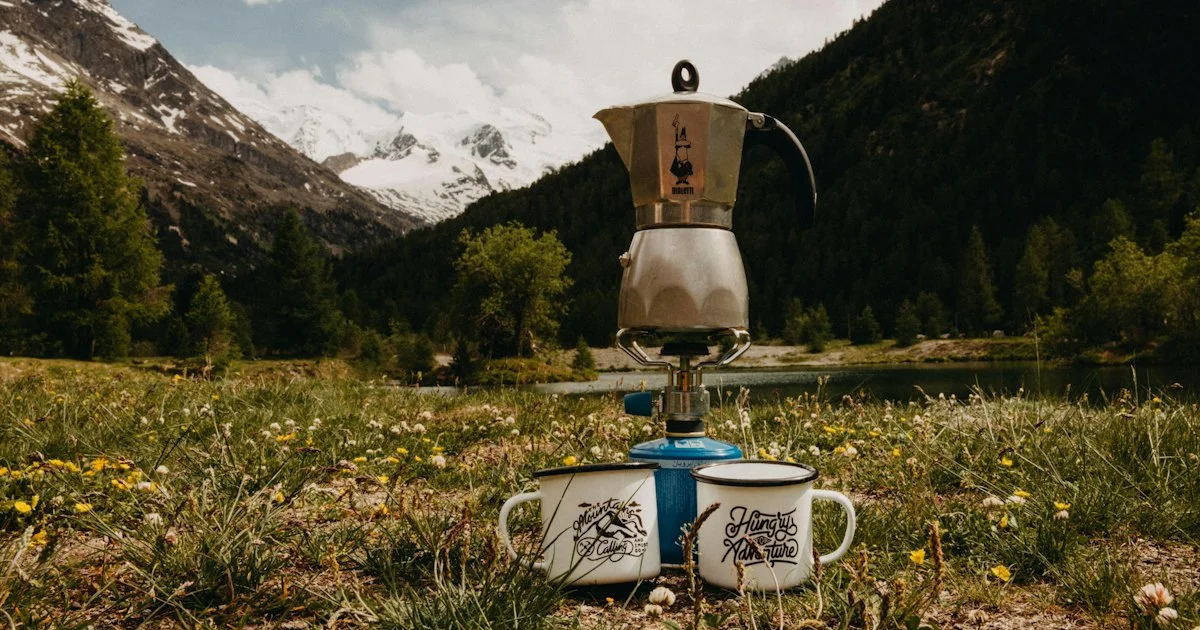
If you already carry a camp stove, a stovetop moka pot is hard to beat. It is metal, has three parts, survives being thrown in a box, and makes a strong concentrated brew that stands up to powdered milk or a splash of water.
Pick aluminium for weight or stainless steel for durability and induction compatibility. Match the pot size to how many people you are brewing for — moka pots only work properly when filled to their designed capacity.

Best for Backpacking and Weight-Conscious Trips
When every ounce counts, a lightweight press-style or pour-over brewer usually wins on practicality even though it does not technically make espresso. Hand pumps are heavier than they look, and moka pots are solid metal.
This is a real trade-off, not a compromise to talk yourself out of. If your priority is hot, strong coffee at low weight, a plastic press or collapsible dripper will get more use than a heavier device that makes a better cup.
Best for the Office or a Second Home
If the device mostly lives in one place and only occasionally travels, you can afford something bulkier with a built-in kettle or a rechargeable heating element. These make the whole process one-step, which is worth the size penalty when it is sitting in a drawer at work.
Just check the charging situation. Battery-heated models take a while to heat water and need charging regularly, which is fine at a desk and frustrating in a car.
Manual Espresso Maker Review: What to Actually Check
A useful manual espresso maker review goes past the marketing photos and covers the parts that decide daily use. These are the five things to look for.
- Effort per shot. Some hand pumps take 30 seconds of firm pumping. Try before you commit to it every morning.
- Seal quality. Rubber gaskets are the part that fails. Check that replacements are actually available.
- Cleaning steps. Count the parts. Anything over four becomes a chore in a campsite sink.
- Heat tolerance. Plastic components near boiling water need to be genuinely rated for it.
- Grind sensitivity. Some devices only work well in a narrow grind window, which is hard to hit with pre-ground coffee.
Travel Coffee Gadget Comparison
This travel coffee gadget comparison keeps to qualities rather than model names, since specific products come and go every year.
| Style | Best for | Needs | Trade-off |
|---|---|---|---|
| Hand pump | Hotels, airports, offices | Hot water only | Physical effort; more parts to clean |
| Stovetop moka pot | Camping, rented kitchens | A burner or camp stove | Not true espresso pressure; needs a heat source |
| Capsule-based portable | Convenience-first travellers | Hot water and capsules | Tied to buying specific pods |
| Press-style brewer | Backpacking, low weight | Hot water only | Makes strong coffee, not espresso |
| Battery-heated unit | Cars, offices, long stays | Charging access | Heaviest and slowest to heat |
Best Portable Coffee Press Ranked by Use Case
If you decide pressure brewing is not worth the bulk, the best portable coffee press ranked by situation looks like this. It is ordered by how well each handles travel, not by how good the coffee tastes at home.
- Plunger-style plastic press: the most travel-proof option. Light, hard to break, easy to rinse.
- Collapsible silicone dripper: packs flattest, but needs filters you have to remember to bring.
- Insulated press bottle: brews and carries in one vessel, ideal for a long drive or a train.
- Glass press: the best cup of the four and the worst travel companion. Leave it at home.
How We’d Shortlist One
Answer these in order and the choice usually makes itself.
- Decide your heat source. Kettle, burner, or nothing? This eliminates most of the market immediately.
- Set a weight and bulk limit based on the bag you actually carry.
- Choose ground coffee or capsules, and be honest about whether you will keep buying pods.
- Count the parts and check the gaskets are replaceable.
- Only then compare brands and finishes.
Frequently Asked Questions
A few things worth knowing before you buy your first travel brewer.
Do portable espresso makers produce real espresso?
Hand-pump devices can reach genuine espresso pressure and produce a shot with crema. Stovetop moka pots brew at much lower pressure, so the result is strong and concentrated but not technically espresso. Both make good coffee.
Can I take one in carry-on luggage?
Manual devices with no battery are generally straightforward. Anything with a built-in rechargeable battery follows the same airline rules as other lithium battery devices, so check your airline’s policy before you fly.
What grind should I use?
Hand pumps want a fine espresso grind. Moka pots want something slightly coarser than espresso. Presses want a medium-coarse grind. Using the wrong one is the most common reason a device seems to make bad coffee.
How do I clean one without a proper sink?
Knock the used grounds out while the device is still warm, rinse with clean water, and let the parts air-dry separately. Avoid soap on aluminium moka pots — it strips the seasoning that improves the flavour over time.
Conclusion
Start with your heat source, not with the product photos, and the right style becomes obvious. Match that to how much weight you will actually carry, and you end up with a brewer that travels with you instead of gathering dust in a drawer.


