

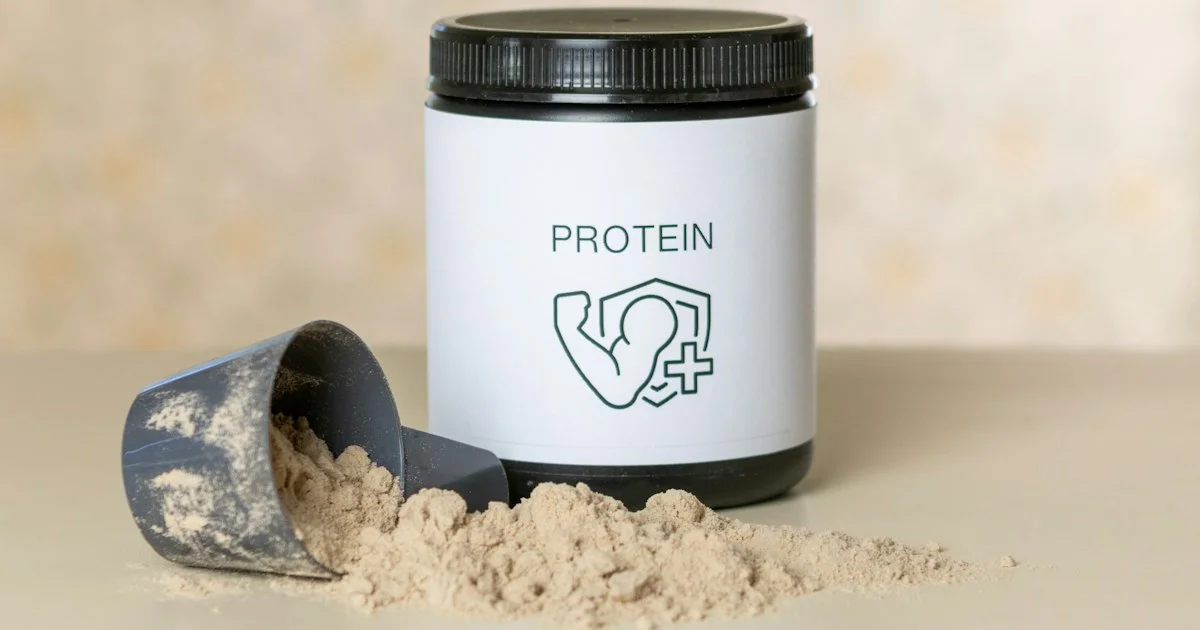
The plant protein aisle has quietly become one of the most confusing shelves in the store, and most of the confusion is the labels’ fault rather than yours. Working out which plant based protein powder to buy 2026 is mostly a question of matching one protein source to one goal, then checking three things on the back of the tub. The front of the tub is advertising.
How to shortlist in five steps
Do these in order. By step three most of the shelf has ruled itself out.
- Work out how much protein you actually need. The NIH Office of Dietary Supplements puts athlete intake at 0.55 to 0.9 g per pound of body weight (1.2 to 2.0 g/kg) per day, and notes that position statements consider up to about 2.0 g/kg safe for athletes. Most people are closer to the bottom of that range than they assume.
- Decide whether you need powder at all. NIH’s guidance is to get essential amino acids from complete proteins or from “a combination of plant-based foods with complementary proteins.” Powder is a convenience, not a requirement.
- Pick the protein source for your goal and your gut. Pea, soy, rice, hemp and blends behave differently, and the differences are covered below.
- Read the nutrition panel, not the headline. Grams of protein per scoop, scoop size, added sugar, sodium, and whether the serving on the panel matches the serving you will actually make.
- Look for an independent testing mark if you compete in a tested sport or simply want an outside check on the label.
What pea protein gives you
Pea protein isolate typically runs about 80 to 85 percent protein, with a reported digestibility of roughly 0.82 to 0.93. It is high in lysine and in branched-chain amino acids, with methionine and cysteine as its weaker points, and it is free of soy, gluten and dairy — which is why it has become the default base for so many blends.
Texture is its real-world catch. Pea protein is thicker and earthier than whey, and it mixes far better in a blender with fruit or oats than shaken with water.
Who pea protein suits
- Anyone avoiding dairy, soy or gluten who still wants a high-protein scoop
- People training regularly who want the branched-chain amino acids without an animal source
- Anyone who blends rather than shakes, because texture stops being an issue
- First-time buyers who want one tub that does most jobs adequately

What soy, rice and hemp give you
Soy isolate is the highest-scoring plant option on the standard measure, carrying a PDCAAS of 1.0 — the maximum — with isolates at 90 percent protein or more and a complete amino acid profile. It is also one of the major food allergens, which rules it out for some households outright.
Rice protein is short on lysine but comparatively rich in cysteine and methionine, with digestibility slightly below soy and pea. That weakness is exactly why it is so often blended with pea: the two cover each other’s gaps, which is the practical version of NIH’s “complementary proteins” advice.
Hemp protein is different in kind. At around 50 percent protein it is not a concentrate at all, and the rest of the scoop is fiber and fats including omega-3s. Digestibility is moderate and lysine is a little low. It is a food first and a protein supplement second.
Who each of the others suits
Soy suits anyone without a soy allergy who wants the most complete single-source plant protein and the lowest price per gram. Rice suits people who react badly to legumes, and is best bought as a pea-rice blend rather than alone. Hemp suits anyone who wants fiber and fats alongside the protein and is not chasing a protein number. The top plant based protein powder for USA shoppers is most often a pea-rice blend, simply because it solves the amino acid problem without introducing a major allergen.
How to buy the best plant based protein powder without overpaying
How to buy the best plant based protein powder comes down to reading the panel in a fixed order, because the front label is designed to be read in a different one.
- Grams of protein per scoop, then scoop size — a big number on a 45-gram scoop is not the same as the same number on a 30-gram one
- Added sugar, which is how a lot of powders become drinkable
- Sodium, which is often surprisingly high in savory-neutral flavors
- Whether the tub states a testing mark such as NSF Certified for Sport, Informed Sport or USP Verified
- Flavor count: unflavored is the most versatile and the hardest to drink with water alone
It is worth knowing that dietary supplements in the United States are not approved by the FDA before sale the way medicines are. An independent testing mark is the cheapest way to get a second opinion on what the label claims.
Buyer’s decision table
| If you want this | Buy this | Trade-off |
|---|---|---|
| One tub that does most things | Pea-rice blend, unflavored or vanilla | Thicker texture than dairy protein |
| The most complete single source | Soy protein isolate | A major allergen for some households |
| To avoid legumes entirely | Rice protein, ideally in a blend | Lower lysine and a chalkier mouthfeel |
| Fiber and fats with the protein | Hemp protein | Roughly half the protein per scoop |
| To pass a tested-sport screen | Anything carrying a batch-testing mark | Costs noticeably more per serving |
| The best flavor with water alone | A flavored isolate, not a raw concentrate | Added sugar or sweeteners in the panel |
What the best plant based protein powder for USA shoppers has in common
Across the whole category the tubs worth buying share the same four traits, and none is exotic. The best plant based protein powder for USA buyers states its protein source by name rather than hiding behind a “plant blend,” publishes a scoop size you can check, keeps added sugar modest, and is something you will genuinely drink several times a week. A tub you dislike is a tub that sits unopened.
Frequently Asked Questions
Four questions come up more than the rest once the choice is down to two tubs.
Is plant protein as good as whey for building muscle?
For most people eating enough total protein, the gap is small. NIH notes that whey carries more leucine than casein or soy, which is the usual argument for dairy protein. Plant blends close much of that gap, and total daily intake matters more than the source.
Do I need protein powder if I already eat well?
Usually not. NIH’s own framing is that essential amino acids come from complete proteins or complementary plant foods; powder is a convenient way to hit a number, not a nutrient you would otherwise miss.
Why does my shake taste chalky?
Plant proteins are coarser than dairy proteins and do not dissolve the same way. Blending with a banana, oats or a milk alternative fixes most of it. Shaking a raw concentrate with cold water is the worst-case combination.
Can I take too much?
NIH reports no safety concerns at the daily intakes recommended for athletes. That said, protein powder is a food product rather than a treatment, and anyone with kidney disease, anyone pregnant, and anyone managing a medical condition should check with a doctor or a registered dietitian before adding a daily supplement.
Conclusion
Match the protein source to your allergies and your goal, check the scoop size before the headline number, and buy a flavor you will drink. For most households that lands on a pea-rice blend, and the decision is done in about two minutes at the shelf.


