

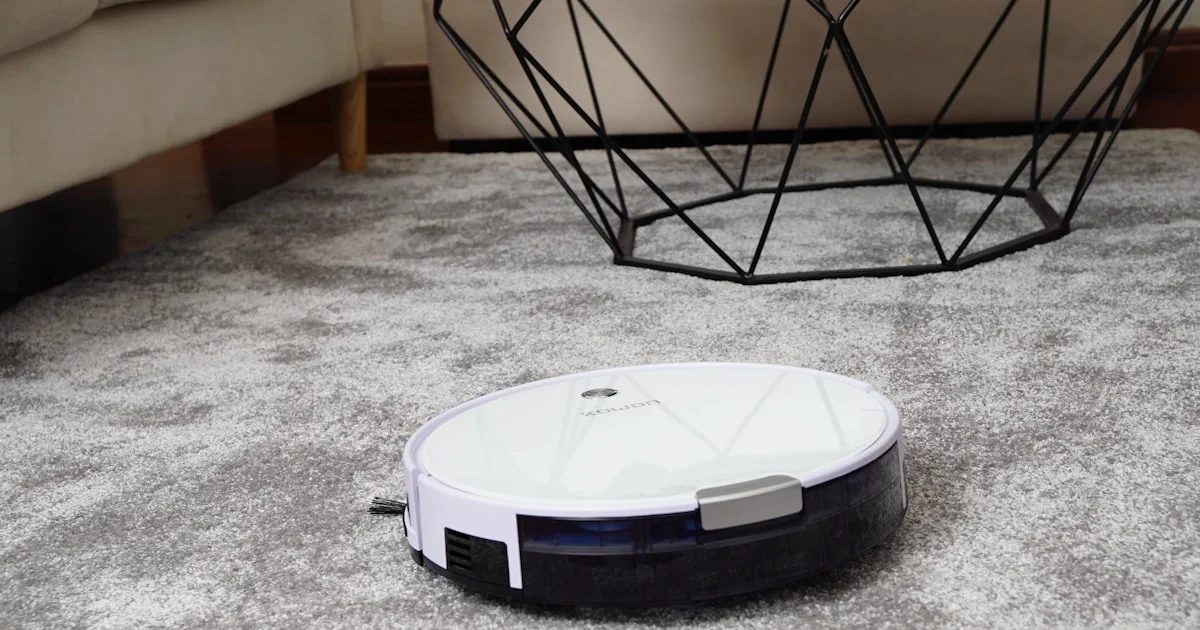
Anyone who shares a home with a shedding dog or cat knows the cycle: vacuum on Saturday, and by Wednesday there’s a fresh drift of fur under the couch again. A good robot vacuum for pet hair earns its keep by running daily instead of weekly, catching fur before it builds into visible tumbleweeds. This guide breaks down which features actually matter for pet owners, which ones are marketing noise, and how to pick a model that keeps working well a year from now instead of clogging up in month three.
Key Takeaways
- Tangle-resistant brush rolls (rubber fins or a dual-brush design) matter more for long-haired pets than raw suction wattage.
- A wider dustbin, or a self-emptying base, cuts down on the twice-a-week chore of clearing hair out by hand.
- Carpet performance depends on brush lift and suction ramp-up on thicker pile, not just the number printed on the box.
- Mapping and no-go zones matter almost as much as cleaning power if you have a litter box, food bowls, or cords the robot needs to avoid.
- Filter quality affects allergy symptoms nearly as much as cleaning frequency, so look for HEPA-rated filtration if anyone in the house has pet allergies.
Best Robot Vacuum for Pet Hair: The Short Answer
The short answer: the best robot vacuum for pet hair pairs a tangle-resistant brush roll with strong carpet suction and a dustbin (or docking base) large enough to go several days between empties. Fur is different from ordinary household dust — it wraps around spinning brushes, clogs intake vents, and mats into cords that stall a cheap motor within weeks. A robot built with pet owners in mind uses a brush design that sheds hair instead of collecting it, plus a filtration system that traps dander rather than blowing it back into the air. Skip any model whose marketing leans entirely on suction power without mentioning brush design at all — that’s usually a sign it wasn’t built with pet hair specifically in mind.
How Robot Vacuums Actually Deal With Pet Hair
Traditional bristle brush rolls grab hair effectively at first, but long fur wraps tightly around the bristles and has to be cut away by hand every few runs. Newer designs solve this with rubber fins instead of bristles, a comb that strips hair off the roller as it spins, or dual counter-rotating brushes that funnel debris toward the suction opening instead of letting it wind up. None of these approaches are perfect, but rubber-fin and self-cleaning designs need far less manual untangling than a plain bristle brush, which matters most for anyone with a long-haired dog or cat.
Suction still matters, especially on carpet, but it works alongside the brush rather than replacing it. A robot with excellent suction and a poor brush design will still end up with a hair-wrapped roller that spins slower and slower until it stalls.
Mopping Robot Comparison: Is Combo Cleaning Worth It for Pet Owners?
A useful mopping robot comparison for pet households comes down to one question: does your home have enough hard flooring to justify the extra complexity? Combo robot vacuum-and-mop units are convenient on tile, laminate, and sealed hardwood, where they can lift dried mud tracks and litter dust that a vacuum alone leaves behind. But mopping pads can smear wet fur or drag pet accidents across a wider area if the robot isn’t paused and the area cleaned by hand first. If most of your home is carpeted, a dedicated vacuum-only robot with excellent brush design is usually the safer, simpler pick. If you have large stretches of hard flooring and stay on top of accidents quickly, a combo unit adds real convenience.
When Mopping Adds the Most Value
Mopping features shine in entryways, kitchens, and litter box rooms — the same spots where paw prints and litter dust accumulate fastest. Look for a model that lets you set no-mop zones around carpets and rugs, since dragging a wet pad across fabric flooring causes more problems than it solves.
Budget Robot Vacuum Honest Review: What You Actually Give Up
A fair budget robot vacuum honest review has to say plainly what a lower price sacrifices, because pet owners feel these trade-offs faster than anyone else. Budget models typically use simpler bristle brushes prone to tangling, smaller dustbins that fill up within a single cleaning session in a shedding household, and weaker suction that struggles once carpet pile gets deep. Mapping is often more basic too — random-path cleaning instead of a stored floor plan, which means less consistent coverage and more missed corners where fur collects.
Where It’s Fine to Save Money
Not every premium feature earns its markup. Voice assistant integration, app-based cleaning history, and multi-floor mapping are nice extras but don’t affect how well hair gets picked up. If a budget model still has a rubber-fin brush and a reasonably sized bin, it can handle moderate shedding just fine — it’s the brush design and bin size that deserve the bigger chunk of a limited budget, not the smart-home extras.
Robot Vacuum for Carpets, Ranked by Household Type
Since robot vacuum for carpets ranked lists vary so much by household, it helps to sort by your actual situation instead of chasing a single “best overall” pick:
- Heavy-shedding, mostly carpeted homes — prioritize a tangle-resistant brush and the highest carpet suction you can afford; bin size and brush design matter more here than anywhere else on this list.
- Mixed carpet and hard flooring — look for automatic suction boost on carpet edges, since robots that don’t ramp up power when they sense pile leave visible fur behind on rugs.
- Mostly hard flooring with one or two rugs — a combo mop-and-vacuum unit with adjustable suction zones covers both surfaces without needing two separate machines.
- Multiple pets or multiple floors — a self-emptying base becomes less of a luxury and more of a necessity, since manual bins fill up fast enough to need daily attention otherwise.

Robot Vacuum Tiers Compared
Rather than comparing exact models, it helps to compare the general tiers robot vacuums fall into and what each one trades off. This table focuses on practical differences rather than prices, which shift constantly and vary by retailer.
| Tier | Best For | Trade-off |
|---|---|---|
| Entry-level bristle brush | Light shedding, mostly hard floors | Needs frequent manual brush cleaning |
| Mid-range rubber-fin brush | Moderate to heavy shedding, mixed flooring | Larger bin still needs weekly emptying |
| Self-emptying combo unit | Multiple pets, minimal hands-on maintenance | Higher upfront cost and a bulkier dock |
| Mapping-focused premium model | Large homes, multiple floors, precise no-go zones | Smart features add cost without improving pickup power |
Keeping Your Robot Vacuum Running Long-Term
A few habits make a real difference in how long a pet-hair robot vacuum keeps performing well:
- Clear hair from the brush roll weekly, even on self-cleaning designs, since some fur inevitably slips past the comb.
- Rinse or replace filters on the manufacturer’s suggested schedule — a clogged filter quietly kills suction long before it triggers any error message.
- Set no-go zones around cords, pet bowls, and litter boxes rather than relying on the robot to detect them on its own every time.
- Empty the dustbin (or check the self-emptying bag) after any particularly heavy shedding week, like seasonal coat changes.
- Wipe down the wheels and sensors monthly, since matted fur around the wheel axles can throw off navigation over time.
Frequently Asked Questions
A few questions come up constantly from pet owners shopping for their first robot vacuum. Here are straightforward answers to the most common ones.
Do robot vacuums really work on thick pet fur?
Yes, but the brush design matters more than the marketing suggests. Rubber-fin or self-cleaning brush rolls handle thick fur noticeably better than plain bristle brushes, which tangle and slow down within a few cleaning cycles.
How often do I need to clean the brush roll myself?
Even the best tangle-resistant designs benefit from a quick manual check weekly in a heavy-shedding household. It only takes a minute or two, and it prevents the slow suction decline that comes from a partially wrapped brush.
Is a self-emptying base worth the extra cost for one cat or dog?
For a single pet with light to moderate shedding, it’s a nice convenience rather than a necessity. For multiple pets or a heavy shedder, it saves enough manual emptying to be genuinely worth the higher price.
Will a robot vacuum trigger my pet’s anxiety?
Some pets startle at first, but most adjust within a week or two, especially if you run the robot at the same time daily so the routine becomes predictable. Starting with the robot off and letting your pet investigate it first also helps.
Conclusion
The best robot vacuum for pet hair comes down to brush design and bin capacity more than any other spec on the box. Prioritize a tangle-resistant brush roll, confirm the suction holds up on your actual flooring, and build a light weekly maintenance habit around it. Get those three things right, and daily pet hair pickup stops being a chore you have to think about at all.


