

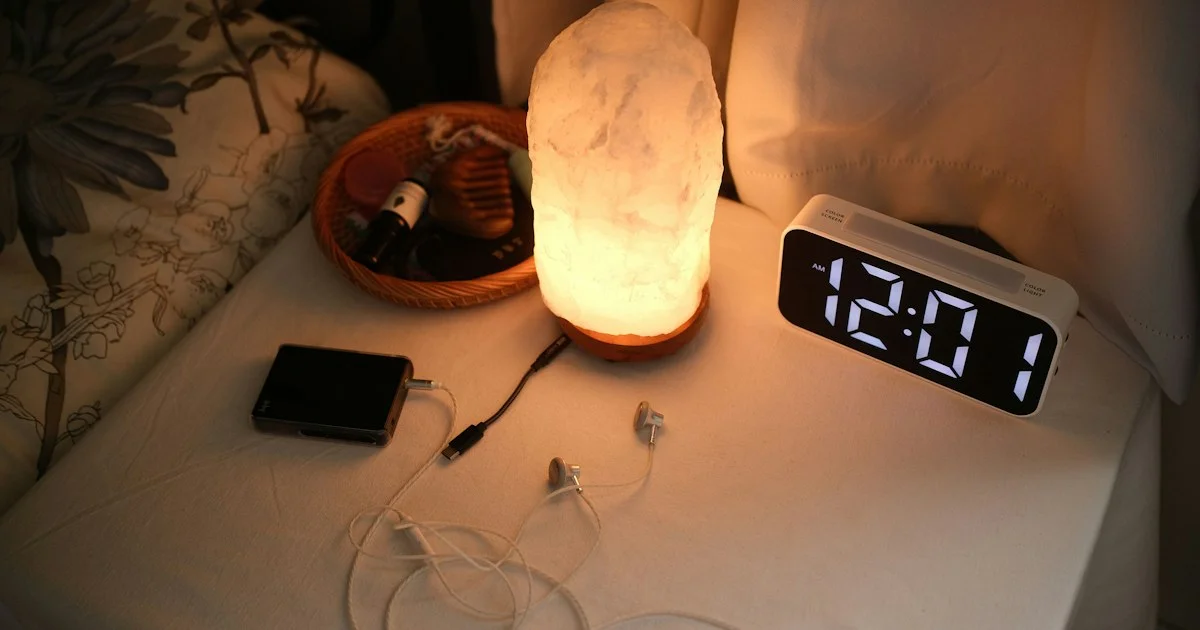
Waking to a phone alarm in a pitch-black bedroom is a rough way to start the day, especially between October and March. A sunrise alarm clock for waking up takes a gentler approach: it brightens the room slowly over 20 to 40 minutes so you surface before the sound ever arrives. This guide covers what these clocks do, who they suit, and how to pick one without overpaying for features you will never use.
Key Takeaways
- The light is doing the work. Sound is a backup, not the main event, on a well-set-up sunrise clock.
- Maximum brightness and where you put the clock matter more than the number of light settings.
- A long fade — 30 minutes rather than 10 — is what separates a gentle wake from a bright light in the face.
- Heavy sleepers still need a real alarm sound. Look for a model with a loud backup tone, not just chirping birds.
- Most extras — radio, speakers, app control — are conveniences. None of them change how well you wake up.
What a Sunrise Alarm Clock for Waking Up Actually Does
The short answer: it replaces a sudden noise with a gradual increase in light, so you wake from a lighter stage of sleep instead of being yanked out of a deep one. That is why people describe it as feeling less jarring rather than as making them sleep longer.
It is worth being clear about what it is not. A sunrise clock is a comfort and routine device, not a treatment. If you are dealing with persistent insomnia, daytime exhaustion, or a sleep problem that is affecting your health, that is a conversation for a doctor rather than a shopping decision.
Best for Dark Winter Mornings
This is the clearest case for buying one. If you get up before sunrise for months at a time, prioritize peak brightness and a large, evenly lit lamp face over every other feature.
Placement matters as much as the specification. The clock should sit roughly at head height and within a couple of feet of your pillow — a bright lamp across the room does much less than a modest one beside you. Check the fade length too, and set it to at least 30 minutes when the mornings are darkest.
Best for Heavy Sleepers
If you routinely sleep through alarms, the light alone probably will not be enough, and you should plan for that instead of hoping. Pick a model with a genuinely loud backup alarm and a volume that ramps up rather than starting quiet and staying there.
A few practical additions help. Choose a clock with a real snooze button you can hit without looking, and consider keeping the phone alarm as a second layer for the first few weeks. Some models add a vibration pad or a bed shaker, which is the most reliable option for very deep sleepers.

Best for Shared Bedrooms
When two people wake at different times, the light becomes a problem rather than a benefit. Look for a clock with a narrow or directional light, or plan to position it low and angled toward your side of the bed.
Dual alarms are worth having here, as is a headphone jack or Bluetooth so the sound can go to one person only. Honestly though, a small clock close to the sleeper who is waking beats a bright one in the middle of the room every time.
Best for Small Nightstands and Travel
Many sunrise clocks are surprisingly large, because a big light panel is the easiest way to get brightness. If your nightstand is already crowded, look at the compact models and accept that they will be dimmer.
For travel, a small battery-capable unit or a smart bulb on a schedule usually makes more sense than packing a dedicated clock. A sunrise clock is genuinely bulky luggage for what it does.
Wake Up Light Comparison
This wake up light comparison stays at the category level, since individual models are replaced constantly while these trade-offs stay the same.
| Type | Best for | Trade-off |
|---|---|---|
| Large dedicated sunrise clock | Dark winter mornings, main bedroom | Takes up most of a nightstand |
| Compact sunrise clock | Small nightstands, second bedrooms | Noticeably dimmer at maximum |
| Smart bulb on a schedule | Cheap experiment, travel, spare rooms | No clock face; depends on your wifi and app |
| Sunrise clock with bed shaker | Very heavy sleepers | Bulkier setup with a cable running to the bed |
| Clock with radio and speaker | People who want one device on the nightstand | Extra cost for features unrelated to waking |
Light Alarm Clock Review 2026: What to Check
A useful light alarm clock review 2026 should cover these points, because they are the ones that decide whether the clock is still in use six months later.
- Minimum display brightness. Many clocks cannot dim their own screen far enough, so the clock face lights the room all night.
- Fade length options. Anything under 20 minutes is too abrupt to feel like a sunrise.
- Button feel in the dark. Touch-sensitive panels are easy to trigger by accident when you are half asleep.
- Behavior after a power cut. Some models lose the alarm entirely; a battery backup avoids a missed morning.
- Whether it works without the app. If an app is required for basic settings, a dead phone becomes your problem.
Best Alarm Clock for Heavy Sleepers, Ranked
If waking up is the hard part, a best alarm clock for heavy sleepers shortlist should be ordered by how hard it is to ignore, not by how pleasant it is.
- Sunrise clock with a bed shaker: physical vibration is the hardest signal to sleep through.
- Sunrise clock with a loud escalating alarm: the light gives you a head start and the sound finishes the job.
- Sunrise clock plus a phone alarm across the room: makes you stand up, which is what actually ends sleep.
- Sunrise clock alone: lovely if it works for you, unreliable on its own for genuinely deep sleepers.
How We’d Shortlist One
Run through these in order and the choice gets simple.
- Decide whether you need gentleness, volume, or both. That single answer rules out most of the market.
- Measure your nightstand, then rule out anything that will not fit within arm’s reach of your pillow.
- Check the fade can be set to 30 minutes and the display can dim to almost nothing.
- Confirm there is a backup alarm sound loud enough to matter, and a snooze button you can find blind.
- Treat radio, speakers, and app control as tiebreakers, not reasons to spend more.
Frequently Asked Questions
The questions that come up most often before buying a first sunrise clock.
Do sunrise alarm clocks actually work?
Most people who use them report waking up feeling less startled, which is the main thing they are designed to do. They are not a fix for being short on sleep — going to bed earlier does far more than any clock can.
How long before my alarm should the light start?
Thirty minutes suits most people. Shorter than 20 minutes tends to feel like someone switching on a lamp, and much longer can brighten the room while you are still trying to sleep.
Can I just use a smart bulb instead?
Yes, and it is a cheap way to find out whether the idea suits you. The downsides are that you depend on your wifi and app to wake up, and you lose the clock face and the physical snooze button.
Will the light bother my partner?
It can, especially with a large lamp in the middle of the room. Placing the clock low on your own side and using a shorter, dimmer fade usually solves it. Otherwise a vibrating alarm may be the more considerate option.
Conclusion
A sunrise clock is one of the smaller changes that makes a genuine difference to how a dark morning feels. Put the brightness and the placement first, make sure there is a real alarm sound behind the light, and treat everything else as optional.


