

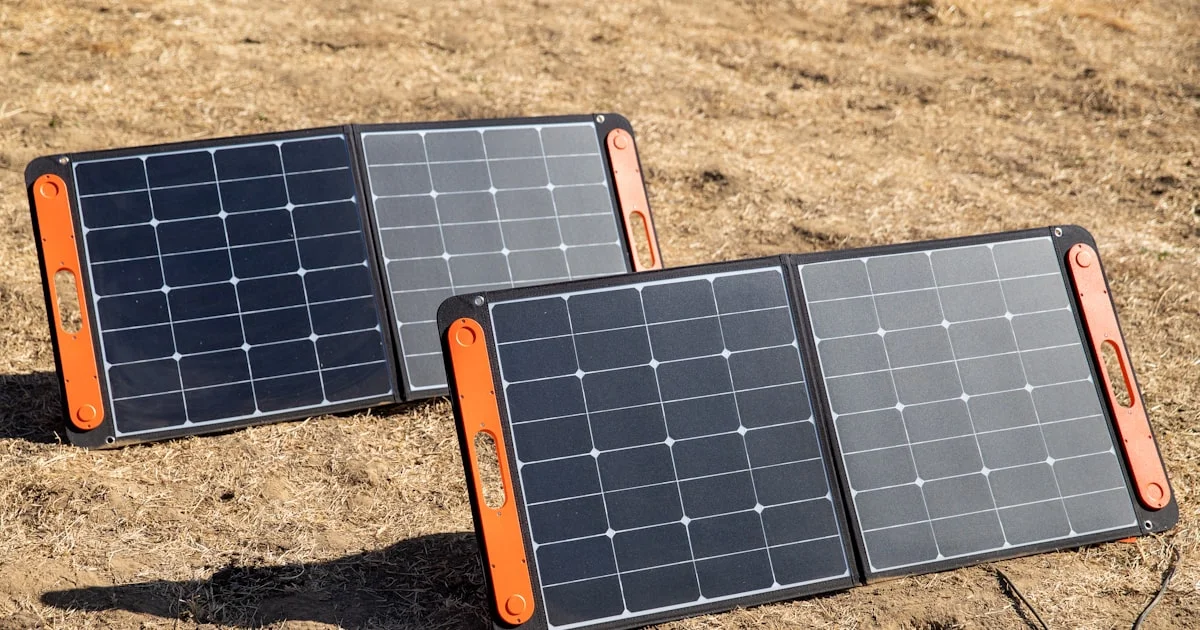
A solar power bank for hiking turns sunlight into a backup charge for your phone, headlamp, or GPS device when there is no outlet for miles. If you are planning multi-day trips and do not want to carry a dead phone into the backcountry, this guide breaks down what actually matters before you buy one.
Key Takeaways
- A solar power bank works best as a slow trickle charger for multi-day trips, not a fast-charging solution for a single afternoon hike.
- Battery capacity, panel wattage, and weight all trade off against each other — more power almost always means more ounces in your pack.
- IP-rated water resistance and a rugged outer shell matter more on the trail than raw charging speed.
- Folding panel designs charge faster in direct sun than panels built into the power bank itself.
- Pair the power bank with a battery bank you charge at home before the trip, so solar is a backup, not your only source.
Solar Power Bank for Hiking: The Short Answer
The short answer: a solar power bank for hiking is worth carrying if your trips run longer than two days or you rely on a phone for navigation, because it lets you top off a battery bank during rest stops instead of running your device down to zero. For short day hikes with cell coverage nearby, a fully charged standard power bank is usually lighter and more practical, since solar panels need hours of direct, unobstructed sunlight to add meaningful charge.
How a Solar Power Bank Works on the Trail
Most hiking solar chargers pair a foldable photovoltaic panel with an internal battery cell. You strap the panel to the outside of your pack or lay it flat during a break, and it slowly feeds power into the battery, which you then use to charge your phone or headlamp on demand. The panel itself rarely charges a phone directly at a usable speed — its real job is refilling the battery bank over the course of a day so you have stored power ready when you need it.
Cloud cover, tree canopy, and panel angle all cut into output significantly, so treat the manufacturer’s charge-time estimates as best-case numbers rather than what you will see on an actual trail.
Rugged Charger Comparison: What Durability Features Matter
A rugged charger comparison has to start with how the unit survives drops, dust, and rain, not just how many watts the panel claims. Look for a rubberized or reinforced outer casing, sealed ports with rubber flaps, and a published IP rating — IP65 or higher is a reasonable bar for anything you plan to clip to a pack strap. Loops or carabiner clips built into the housing are a small detail that makes a real difference when you are hanging the unit off a bag to catch sun while you walk.
- Check for a rubberized or textured grip that resists slipping out of wet hands.
- Confirm the charging ports have a sealed flap or cap, not just an open USB port.
- Look for a published shock or drop rating, not just a marketing claim of “rugged.”
- Favor a matte or textured finish over glossy plastic, which shows scratches and cracks faster.
Best Backpacking Charger Ranked: Capacity vs. Weight
Any best backpacking charger ranked list has to weigh battery capacity against pack weight, because the two pull in opposite directions. A larger battery bank charges your phone more times before needing a solar refill, but every extra 5,000mAh typically adds a few ounces you will feel by day three of a trip. For a solo hiker on a weekend trip, a smaller battery bank paired with a compact folding panel is usually enough. For group trips or multi-week thru-hikes where you are also charging a satellite messenger or camera, a higher-capacity bank is worth the added weight.
Here is a simple way to size your setup before you buy:
- Estimate how many full phone charges you need between resupply points.
- Add one extra charge as a buffer for navigation-heavy or emergency use.
- Match that number to a battery bank’s rated capacity, accounting for real-world efficiency loss of roughly 20 to 30 percent.
- Choose a panel size based on how much direct sun exposure your route realistically offers.
- Weigh the finished setup on a kitchen scale before committing it to your pack list.
Outdoor Power Bank Buying Guide: Ports, Panels, and Battery Chemistry
An outdoor power bank buying guide should cover more than the headline battery number. USB-C input and output with fast-charging support saves real time when you do reach an outlet at a lodge or trailhead store. Lithium-polymer cells tend to handle temperature swings a bit better than older lithium-ion designs, which matters if you are hiking somewhere that gets cold overnight. Also check how many devices the unit can charge at once — some hikers split a single power bank between a phone and a headlamp, and having two output ports avoids constant swapping.
Panel Type: Foldable vs. Fixed
Foldable multi-panel chargers generally output more power because they offer more total surface area, and they pack down flat. Fixed panels built directly onto a power bank’s case are more compact and simpler to use, but they charge more slowly and can only face one direction at a time.
Charging Speed: Solar vs. a Wall Outlet
It helps to set realistic expectations before you leave. A wall outlet or a car charger will always beat solar for raw speed, and no folding panel matches that under normal daylight.
- A full battery bank charge from direct sun typically takes most of a clear day, not an hour or two.
- Partial cloud cover can cut output by half or more, even when it still looks bright outside.
- Charging is fastest when the panel sits perpendicular to the sun, which usually means adjusting its angle every hour or so.
- Battery banks lose some charge to heat and self-discharge, so plan to use stored power within a few days rather than banking it for weeks.
Solar Power Bank vs. Traditional Power Bank
| Factor | Solar Power Bank | Traditional Power Bank |
|---|---|---|
| Best for | Multi-day trips with sun exposure | Short trips or trips with regular outlet access |
| Weight | Heavier due to panel and rugged housing | Lighter for the same battery capacity |
| Charging speed | Slow and weather-dependent | Fast and consistent from any outlet |
| Durability | Usually built for drops, dust, and rain | Varies widely by model |
| Trade-off | Extra bulk for energy independence | Convenience, but you must recharge it before every trip |

When a Solar Power Bank Is Not the Right Choice
If most of your hikes are day trips near a car or a town, a solar charger adds weight for little benefit — a fully charged conventional power bank almost always outperforms it in that scenario. Solar charging also struggles in dense forest, deep canyons, or consistently overcast regions, where panels rarely get the unobstructed sun they need. In those conditions, a larger conventional battery bank you charge before leaving is usually the more reliable choice.
Frequently Asked Questions
A few common questions come up when hikers are choosing between solar and standard power banks.
How long does it take to fully charge a solar power bank?
In direct, unobstructed sunlight, most units take the better part of a full day to charge from empty. Partial sun, cloud cover, or shade will stretch that significantly.
Can a solar power bank charge a phone directly?
Some can, but output is usually too weak and inconsistent for a fast, reliable charge. It is more effective to let the panel refill the internal battery, then charge your phone from that battery on demand.
Are solar power banks waterproof?
Many are water-resistant rather than fully waterproof. Check the specific IP rating before assuming a unit can handle a downpour or a stream crossing without protection.
Do solar power banks work in winter?
They can, but cold temperatures reduce battery efficiency and shorter winter days mean less total sun exposure. Keep the unit insulated in your pack when not actively charging to help preserve capacity.
Conclusion
A solar power bank for hiking earns its weight on longer trips where you cannot count on an outlet and need your phone or GPS to last. Match the battery capacity to your actual trip length, prioritize a rugged, weather-resistant build over marketing claims about charging speed, and treat solar as a way to extend your power supply rather than replace a full charge from home.


