

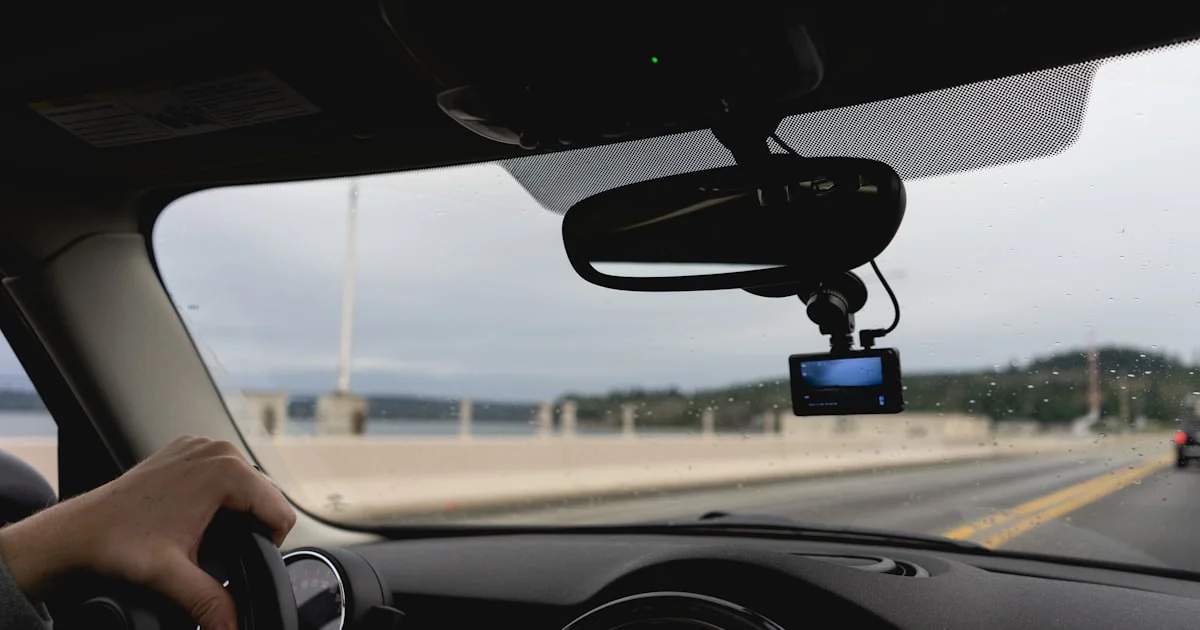
A dash cam earns its keep in about four seconds, once, and does nothing for the rest of its life. That is the whole value proposition, and it changes how you should shop. Deciding which dash cam to buy 2026 is less about headline resolution and more about whether the footage is usable when someone disputes what happened.
Which dash cam to buy 2026: shortlist it in five steps
Run these in order. The first two steps rule out most of the catalogue, and the last one is the step people skip and regret.
- Decide how many directions you need covered. Front-only covers the collision you drive into. A front-and-rear pair covers being hit from behind, which is the more common insurance argument. A three-channel adds the cabin, which matters only if you carry passengers for money.
- Decide whether it needs to record while parked. Parking mode is the feature that catches hit-and-runs in lots, and it is also the feature that dictates how the camera is powered.
- Choose the power source before the camera. A cigarette-lighter plug is simple but stops when the car does. Hardwiring to the fuse box keeps parking mode alive and hides the cable, but needs a kit that cuts off before the battery drains.
- Check night performance, not daylight specs. Most incidents you will care about happen in poor light. Look for real night sample footage rather than a resolution number on the box.
- Check your state’s windshield rules before you pick a mounting spot. They vary, and they decide where the camera can legally go.
What a supercapacitor camera gives you
Every dash cam needs a small amount of stored power to finish writing the current file when the engine cuts. Cheaper cameras use a lithium battery for that. Better ones use a supercapacitor.
The difference is heat tolerance and lifespan. A car’s windshield is one of the most hostile places you can mount electronics: a closed cabin in an American summer gets far hotter than the outside air, and lithium cells degrade quickly under that, swell in the worst cases, and eventually lose the ability to close a file cleanly. A supercapacitor stores far less energy but handles heat and constant charge cycles much better, which is why it has become the standard in cameras designed to live on the glass year-round.
Who a supercapacitor camera suits
Anyone parking outdoors in a hot climate, anyone who wants the camera to still work in its fourth summer, and anyone hardwiring for parking mode. The best dash cam for USA drivers in Arizona, Texas, Florida or anywhere with a long hot season is a supercapacitor model, and the price gap over a battery model has narrowed to the point where the choice is easy.
The one thing a supercapacitor cannot do is run the camera on its own for any length of time, which is why parking mode on these cameras nearly always means hardwiring.

What resolution and sensor quality actually give you
Resolution decides how large the picture is. The sensor and the lens decide whether anything in that picture is readable. Those are different problems, and only the first one appears on the packaging.
The test that matters is whether you can read a license plate on a moving car at night, in the rain, with headlights flaring into the lens. A camera with a good sensor and a modest resolution will often beat a higher-resolution camera with a cheap one. Wide-angle lenses have the same catch: a very wide field of view fits more of the scene in, then spreads the same detail across more pixels, so the plate you needed sits at the blurry edge of the frame.
Who should pay for the higher-end sensor
Anyone who drives at night regularly, anyone commuting on multi-lane highways where the car that matters is two lanes over, and rideshare or delivery drivers whose footage may end up in a claim. Everyone else can spend the difference on a rear camera instead, which covers a more likely accident.
A good top dash cam guide 2026 shoppers can trust will say the same thing plainly: a second camera pointing backwards beats a sharper camera pointing forwards, for most drivers, most of the time.
How to buy the best dash cam without legal surprises
Working out how to buy the best dash cam for where you actually live means checking a few things that have nothing to do with the camera itself:
- Windshield placement rules vary by state. California’s Vehicle Code section 26708 permits only limited windshield zones rather than the whole glass, and Pennsylvania handles dash cams under its general obstruction statute at 75 Pa.C.S. 4524. Minnesota applies general obstruction rules too. Check your own state before you stick anything down.
- Audio recording consent is a separate question. Federal law allows one-party consent, but several states require all parties to a private conversation to agree, including Washington under RCW 9.73.030 and California under Penal Code section 632. Most cameras let you turn the microphone off, and many drivers do.
- Behind the rear-view mirror is the safe default. It keeps the camera out of your sightline, gives it a clear forward view, and sits in the area wipers actually clear.
- Buy a high-endurance memory card. Dash cams overwrite continuously, which destroys ordinary cards. Cards sold specifically for continuous video recording are built for it.
- Check the hardwire kit has low-voltage cutoff. Without it, parking mode can flatten your car battery overnight.
- Test that saved clips actually save. Press the emergency lock button once in the driveway and confirm the file survives a full card cycle.
Match the camera to how you drive
| How you drive | What to buy | Why |
|---|---|---|
| Daily commute, garage parking | Front-only, supercapacitor | Covers the driving risk without paying for parking coverage you do not need |
| Street or lot parking overnight | Front and rear, hardwired | Parking mode is the point, and it needs constant power |
| Rideshare or delivery work | Three-channel with cabin view | Passenger disputes are the claim most likely to involve you |
| Mostly night driving | Spend on the sensor, not the resolution | Readable plates in low light beat a bigger blurry picture |
| Hot climate, outdoor parking | Supercapacitor, no lithium cell | Cabin heat is what kills battery-based cameras first |
| Older car, simple needs | Plug-in front camera, high-endurance card | Ten-minute install with no wiring and no fuse box work |
Frequently Asked Questions
A few questions come up every time someone fits their first camera.
Will a dash cam drain my car battery?
Not while you are driving. It can while parked, which is why hardwire kits include a low-voltage cutoff that shuts the camera down before the battery falls too far. Set that cutoff conservatively on an older battery, and check the car starts normally for the first week after fitting.
Does dash cam footage actually help with insurance?
It can, by settling who did what when accounts disagree. Insurers are not obliged to change a decision because you have video, and footage can also show you at fault. Treat it as evidence rather than a guaranteed advantage, and save the clip immediately after an incident before the card overwrites it.
How long does a memory card last in a dash cam?
Less time than in a camera or a phone, because the card is being rewritten constantly. High-endurance cards are built for this and last considerably longer, but they are still consumables. Reformat the card every few months and replace it when the camera starts reporting errors.
Is 4K worth paying for?
Only alongside a good sensor and lens. A 4K file from a weak sensor at night will not give you a readable plate, and it fills the memory card far faster, which shortens how much history you keep. A well-made 1440p camera is usually the better buy at the same price.
Conclusion
Pick the camera around the moment you actually need it: at night, in poor weather, when someone disagrees with you. That points at a supercapacitor, a decent sensor, a rear channel before a resolution bump, and a mounting position your state allows.


